Sintra-Portugal.com
The best independent guide to Sintra
Sintra-Portugal.com
The best independent guide to Sintra
Sintra in 48 hours - a guide to two days in Sintra for 2026
One day in Sintra is a mistake. I have watched too many friends arrive on the morning train from Lisbon, sprint between two palaces, queue for a third, and leave at dusk wondering what all the fuss was about. They saw Sintra. They did not understand it.
The town was never built to be rushed. Sintra is a UNESCO World Heritage site of painted palaces, a Moorish castle clinging to a granite ridge, and one of the strangest mountain gardens in Europe, all held together by the cool Atlantic mists that drift up the hillside most mornings. Three or four headline sights would already be too much for a day. There are nine. To rush them is to miss the point of a town that kings and queens built, over five centuries, as a place to escape the world.
Two days changes everything. You can arrive at Pena for opening time without the coach crowds, climb the battlements of the Moorish Castle without checking your watch, and still have an afternoon left for Monserrate, which most day-trippers never reach. You also get to see Sintra after four o'clock, when the buses pull away and the town returns to itself. The cobbled lanes empty, the cafés calm, and the mist settles into the pines. This is the Sintra the day visitor never meets.
I have been exploring Portugal since 2001, and together with my Portuguese wife I have spent countless weekends wandering Sintra's hills in every season, from August heat to January fog. This guide is the two-day itinerary I send to friends planning their first proper visit, so you can see past the headline palaces to the Sintra we have come to know.
Related articles: A day trip to Sintra
What to see in two days in Sintra
Sintra packs more first-rank sights into a single hillside than any other small town in Portugal. The trouble is choosing. Three sights is a full day, which means even with two days you are leaving things out. Below is a guide to each of the headline palaces, gardens, and castles, so you can build a shortlist that suits the kind of trip you want.
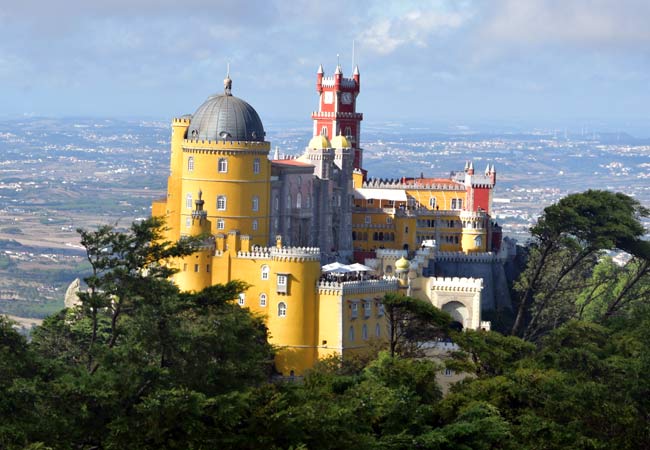
Palácio da Pena: The painted yellow and red palace on the highest peak of the Serra de Sintra, and the image that brought you to Sintra in the first place. King Ferdinand II built it in the 1840s as a Romanticist fantasy on the ruins of a Hieronymite monastery, layering Neo-Gothic towers, Moorish arches, and Manueline stonework into something that should not work, but does. The interior has been preserved as the royal family left it on the morning of the 1910 revolution. The surrounding park is a forest of camellias, ferns, and hidden viewpoints that most visitors miss entirely. Unmissable, but it asks for at least three to four hours of your time.
Quinta da Regaleira: A turn-of-the-century estate built by a wealthy coffee merchant with a serious interest in alchemy, freemasonry, and the Knights Templar, and the budget to put it all into stone. The Neo-Gothic mansion is the headline, but the gardens are the reason to come: a network of grottoes, hidden tunnels, and the famous Initiation Well, a 27-metre spiral staircase descending into the earth. It is the second most visited site in Sintra and feels it. Best visited late in the day when the crowds thin.
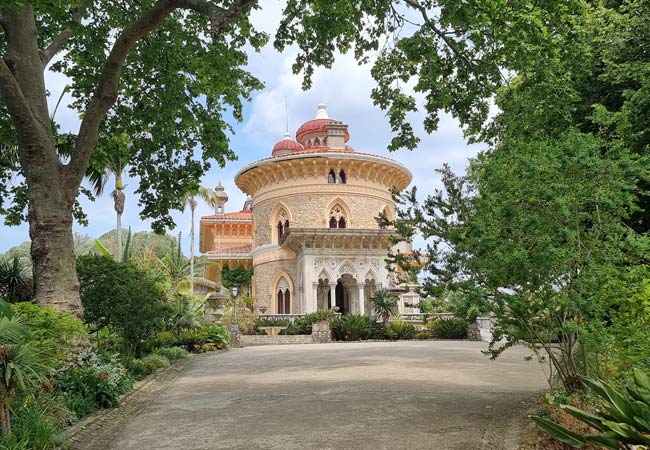
Palácio de Monserrate: The one most visitors miss, and the one I would urge you not to. A long pink villa of three domed towers built by an English textile magnate in the 1850s, with stone latticework as fine as anything in Andalusia and one of Portugal's most important botanical gardens spilling down the hillside. Thirty hectares of Mexican agaves, Australian tree ferns, and a faux-medieval chapel ruin slowly disappearing into the forest. Three kilometres from the centre of town, and quieter for it.
Castelo dos Mouros: A 9th-century Moorish fortress strung along a granite ridge above the town, with battlements you can walk and watchtowers you can climb for views across to Pena and out to the Atlantic. There is not much to see in the way of interiors. This is a place for legs and lungs, not for art history. It shares a hilltop with Pena, which makes pairing the two on a single day the natural choice.

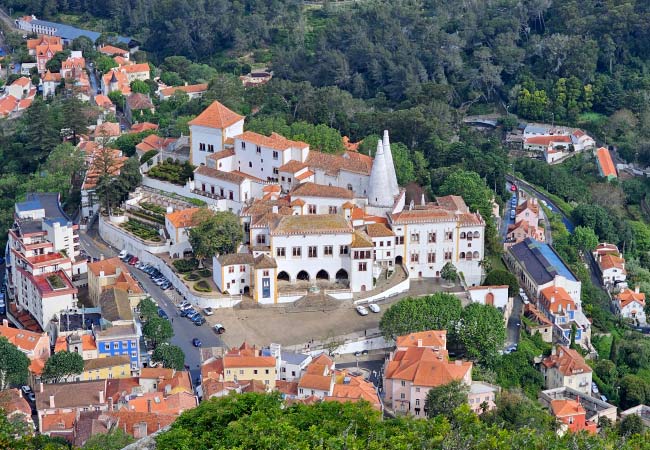
Palácio Nacional de Sintra: The white palace with the two giant conical chimneys in the centre of town, and the oldest surviving royal residence in Portugal. Continuously inhabited by Portuguese kings and queens from the 15th to the late 19th century, and home to one of the finest collections of Mudéjar tilework on the Iberian Peninsula. It sits at the heart of the old town, an hour or two at the start or end of a day, and a gentler counterpoint to the climbs above.
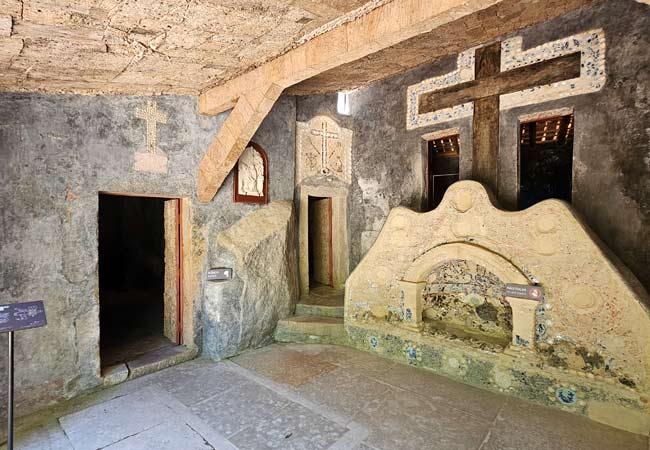
Convento dos Capuchos: A 16th-century Franciscan monastery deep in the forest west of the town, where the monks built their cells directly into the granite boulders and lined the walls with cork for insulation. After the gilded excess of everything else in Sintra, the austerity is startling. One for travellers with a third day, and a taste for the quieter, stranger side of the Serra.
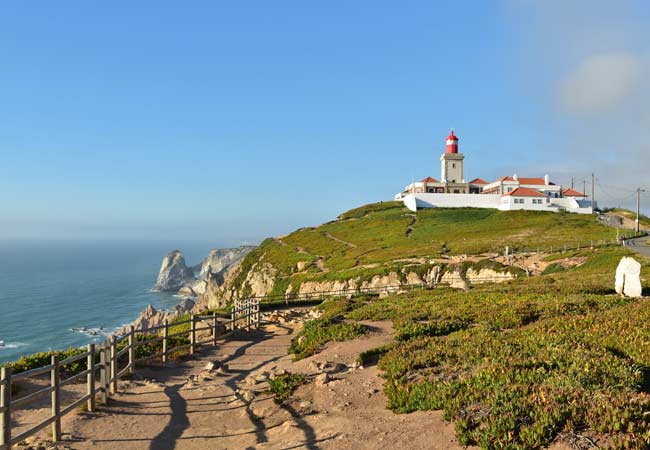
Cabo da Roca: The westernmost point of mainland Europe, where the Sintra hills fall away into 140-metre cliffs and the Atlantic stretches uninterrupted to the Americas. A short drive from the town and best saved for sunset. Not a sight in the museum sense, but one of the most elemental places on the Portuguese coast.
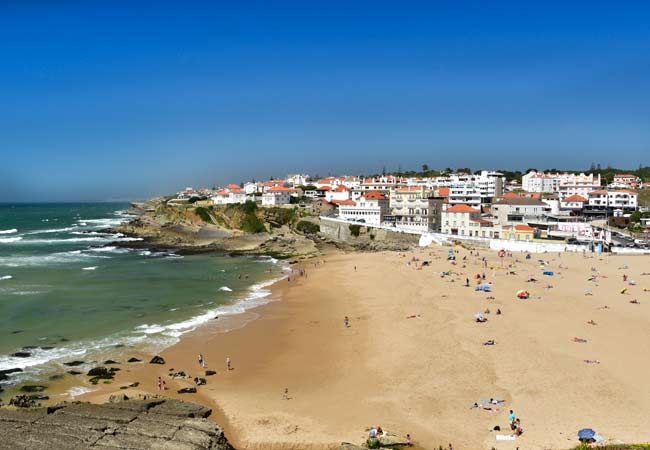
Praia das Maçãs: A small Atlantic resort of low whitewashed houses and a long crescent of sand, connected to Sintra by a historic tram in the summer months. Worth a half day if you are travelling with children, or want to swap palaces for sand for an afternoon.
The two-day itinerary at a glance
Day one: Palácio da Pena for opening at 9:30, then the Castelo dos Mouros on the same hill, then back down to the historic centre for the late afternoon. Sunset at Cabo da Roca if you have the energy.
Day two: An Uber out to the Palácio de Monserrate first thing, then back into town for the Palácio Nacional de Sintra and lunch in the historic centre. Late afternoon at the Quinta da Regaleira, when the gardens are at their quietest.
A detailed day-by-day walk-through, with transport notes and timings, follows below.
Should you spend a night in Sintra?
The case for staying is simple. At four o'clock the coaches leave, and Sintra becomes a different town. The lanes quieten, the queues vanish, and the air begins to settle. You can walk from your hotel to dinner past palaces lit against the dark, and be at the gates of Pena or Regaleira the next morning before the first bus from Lisbon has even left Rossio station. For travellers who want to understand Sintra rather than tick it off, one night here changes the trip.
It is not the right choice for everyone, though, and the case against is worth hearing.
Hotel rooms in Sintra are limited and priced accordingly. You will pay noticeably more than in Lisbon. The dining scene is the other weak spot. There are a handful of fine restaurants and a great many tourist traps, with little in between. Lisbon has spoiled me, and I miss its breadth of cooking whenever I stay up here.
There is also the practical question of luggage. If you are already settled into a Lisbon hotel, dragging a suitcase up to Sintra for a single night, and back down again the following day, often costs more in hassle than it returns in atmosphere. Two day trips from Lisbon, on non-consecutive days if possible, suit most visitors well and leave your evenings free for Lisbon's restaurants.
My own rule of thumb: stay the night if you are travelling at a slower pace, or if you are visiting in the high season (June to September), when escaping the midday crowds is worth real money.
Whichever you choose, book early. Sintra has a small bed-base and a global audience, and in summer the better rooms are gone weeks in advance. The map below shows the best accommodation in the town. Enter your dates to see current prices and availability.
Useful advice before planning your two days in Sintra
A handful of small decisions will shape your two days more than any choice of restaurant or hotel. Here is what I tell friends before they go.
Give Pena Palace the time it deserves. This is the single most common mistake I see. Visitors arrive on a packed day-trip schedule, queue for forty minutes, walk the terraces in twenty, and leave wondering what the fuss was about. Pena asks for three to four hours, not ninety minutes. The interior alone takes an hour at a steady pace, the terraces another hour if you want to revisit them once the morning groups have moved on, and the surrounding park is worth at least an hour more for the Chalet of the Countess of Edla and the viewpoint at Alto do Chá. Plan accordingly, and the palace opens up to you. Rush it, and you will join the chorus of friends who told me Pena was overrated.
Book the interior tickets online, and book early. The interior of Pena uses timed entry, and on-site tickets routinely give you a slot two or three hours after you arrive. In high season, the day's allocation can sell out altogether. Book online a few days ahead at minimum, and choose the earliest slot you can. Buying ahead is the difference between walking straight in and killing two hours in the park waiting for your turn.
Arrive early. Earlier than that. Pena opens at 9:30. Be there for the opening, not for ten o'clock, not for eleven. The first hour is the only hour when the terraces feel like a palace rather than a queue. By eleven the coach groups arrive in waves, and from then until late afternoon the photographs you came for become harder to take. I have done both versions of this morning many times, and the difference is night and day.
Pair Pena with the Moorish Castle. The two sights sit on the same ridge, a fifteen-minute downhill walk apart. Pairing them on a single day means one trip up the hill on the 434 bus or by taxi, and one trip back down. Splitting them across two days doubles your transport headaches for no reason. Pena in the morning, the castle after lunch.
Do not skip Monserrate. Three kilometres from the centre of town, and a world away from the Pena queues. Most day-trippers never make it this far, and the gardens are quieter for it, even on August weekends. I would rather miss the Palácio Nacional than miss Monserrate, and I say this as someone who likes the Palácio Nacional. If your second day is feeling tight, this is the sight to protect.
A detailed guide to day one in Sintra
Day 1 Morning: Palácio da Pena
Set your alarm. The single biggest decision of your two days in Sintra is what time you arrive at Pena, and the answer is 9:30. Be at the palace gates as they open, not as the morning coach tours from Lisbon are pulling into the car park. The first hour, before the crowds build, is the only hour when the painted terraces feel like a palace rather than a queue.
Getting up the hill is half the planning. The 434 tourist bus runs a loop from the train station up to the Moorish Castle and Pena, and is the best option. In high season it is also packed by nine in the morning, and you may be standing in a queue for the bus before you have even started your day. An Uber or Bolt from the historic centre will cost around six or seven euros and gets you to the gates in fifteen minutes without the wait. Taxis are a touch more expensive but otherwise the same deal. Tuk-tuks will do the run for twenty to thirty euros.
A note on tickets. The interior of Pena uses timed entry, and I cannot stress enough how much easier life is if you book the earliest morning slot a few days in advance. Buying on the day in summer routinely lands you a slot two or three hours after you arrive, which means killing time in the park before you can go inside. Book ahead and walk straight in.
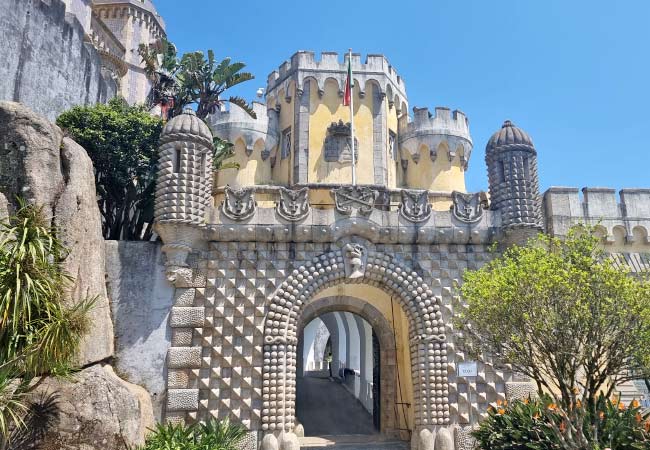
The Palácio da Pena itself is the building every visitor to Portugal already knows by sight. Yellow towers, red battlements, tiled domes, and a setting on the highest peak of the Serra de Sintra at 480 metres above the Atlantic. King Ferdinand II built it in the 1840s on the ruins of a Hieronymite monastery, layering Neo-Gothic, Manueline, Moorish, and Renaissance elements into a single Romanticist fantasy. The terraces are the first thing you will see and the place you will linger longest. Walk the full loop, find the Triton arch and use the small viewpoints on the eastern side for photographs back towards the painted facade.
The interior has been preserved as the royal family left it on the morning of 5 October 1910, when news of the revolution in Lisbon reached them and they fled into exile. The Arab Room, painted in a riot of trompe-l'oeil Moorish patterns, is the most beautiful, and Queen Amélia's private chambers are the most affecting, with her personal furnishings still in place.
After the interior, is the Parque de Pena, a 200-hectare forest the king planted around the palace, is the part of Pena that most day-trippers skip entirely. A thirty-minute walk on the path west of the palace brings you to Alto do Chá, a boulder strewn hill with what I think is the finest view of Pena anywhere on the estate. The path to the Alto da Cruz, the highest point in the park, is twenty minutes of pleasant forest walking with another fine viewpoint at the top. The Valley of the Lakes, in the lower part of the park, is the quiet corner of Pena, with duck ponds and stone benches under camellias.
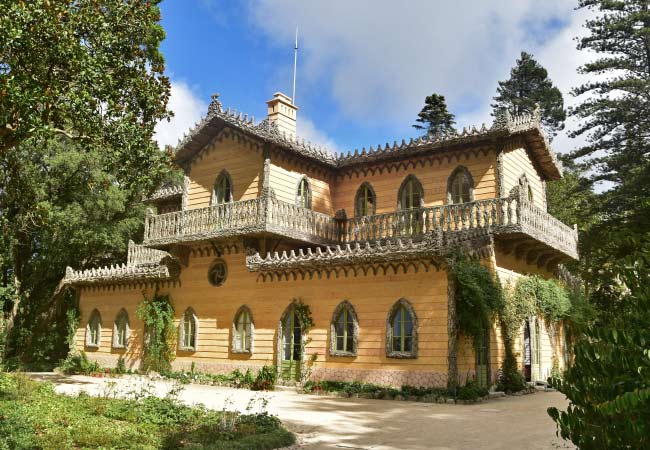
Most importantly, do not miss the Chalet of the Countess of Edla. King Ferdinand built this Alpine-style cottage in the 1860s for his second wife.
Lunch on the hill
Lunch options at the top are limited. The café at Pena does sandwiches, soups, and pastries that are perfectly adequate without troubling anyone's memory, and the prices and queues reflect the captive audience. The advantage is that you stay on the hill rather than burning an hour going down to Sintra and back. Eat here, and then take the chance to walk the terraces a second time.
Afternoon: Castelo dos Mouros
From the gates of Pena, it is a fifteen-minute downhill walk along a forest path to the entrance of the Castelo dos Mouros.
The castle is older than anything else in Sintra by some centuries. The Moors built it in the 9th century as a defensive position guarding the road to Lisbon, and it fell to the Christian forces of Afonso Henriques in 1147 during the Reconquista. What you walk today is largely the medieval shell, restored in the 19th century by Ferdinand II, the same king who built Pena. The same hand is visible on both hilltops.
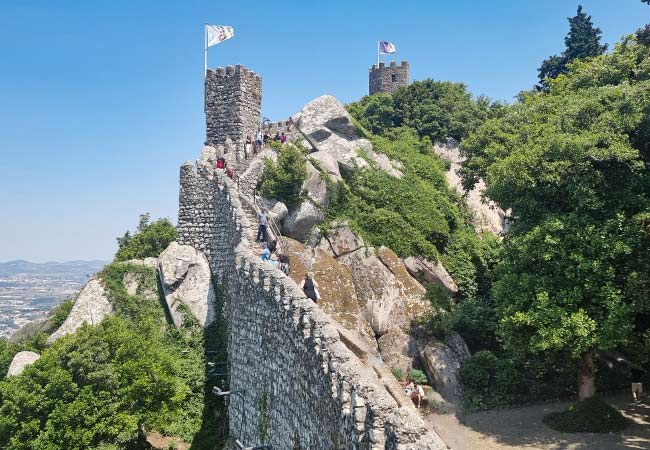
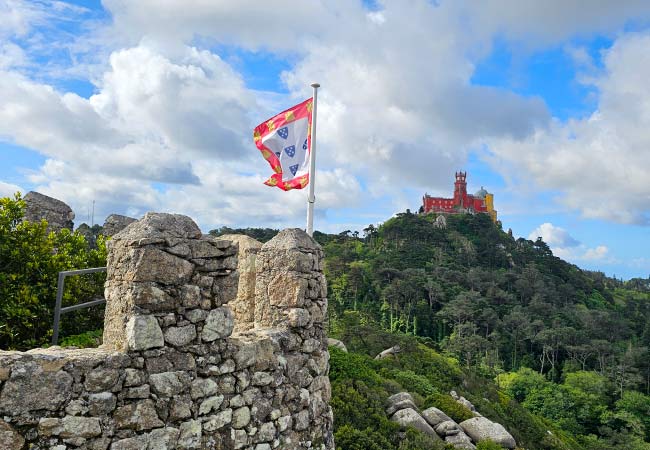
Be honest with yourself before you go in. This is a sight for legs and lungs. You will climb steep steps cut from granite, weave along narrow battlements with serious drops on either side, and work harder than you have all day. If you have a fear of heights, the castle will test it. The reward, is the view. From the battlements you can see Sintra spread out below, Pena on the next peak, the Atlantic to the west, and on a clear day the suburbs of Lisbon to the south.
The Torre Real, the King's Tower, is the highest point of the castle and reached by a 220-step climb. This was Ferdinand II's favourite spot on the whole estate, and from the top you understand why.
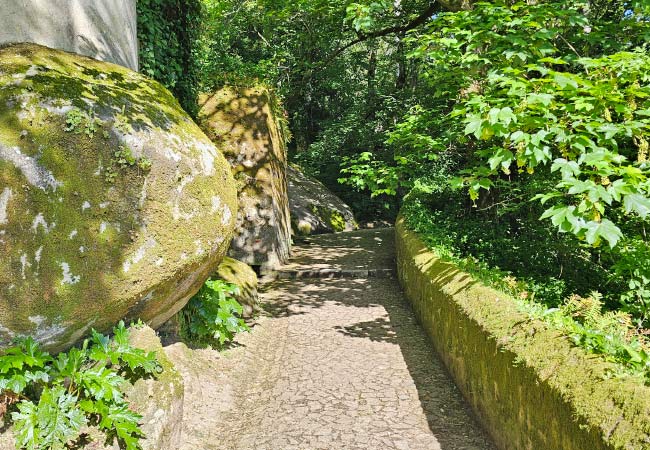
Coming down, you have a choice. A bus, taxi, or Uber back to the historic centre takes five minutes. The better option, if you have the energy, is the Caminho de Santa Maria, a steep but beautiful twenty-minute footpath that drops you on the edge of the historic centre. It winds past the outer walls of the castle, between giant moss-covered boulders, and through chestnut woods, with viewpoints opening up over Sintra all the way down. It is one of the loveliest walks in the area and almost nobody takes it.
Late afternoon: Sintra's historic centre
By the time you reach the centre, it will be late afternoon, the coaches will be pulling away, and the town will be settling back into itself. This is the best hour of the day in Sintra, and the historic centre is the place to spend it.
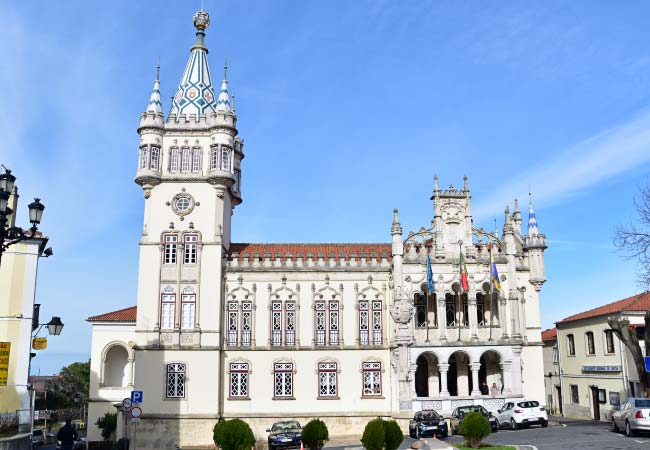
The historic centre is small enough that you cannot really get lost. The Palácio Nacional, with its two huge conical chimneys, sits at the heart of it, but you are visiting that tomorrow. For now, walk the lanes around it. Volta do Duche and Rua das Padarias are the prettiest streets. The Câmara Municipal (the Sintra Town Hall) is a 1910 confection of Neo-Manueline and Neo-Gothic flourishes topped with an extravagant clock tower, and worth the five-minute detour to see from the outside.
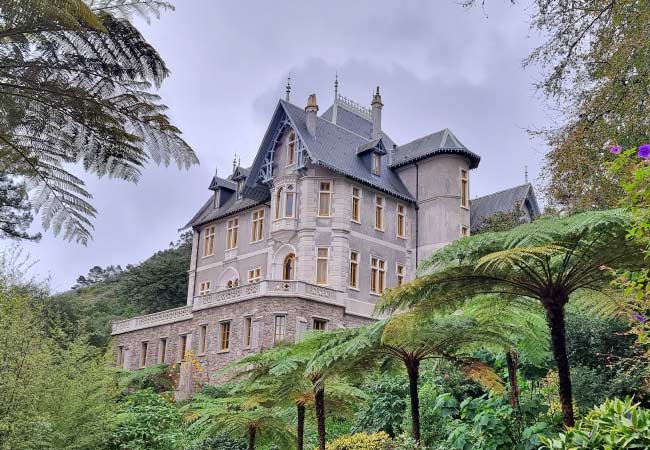
If you have appetite for one more sight, the Palácio Biester is a 19th-century Neo-Gothic mansion a short walk from the centre,. The gardens are the draw, terraced and shaded, and the house keeps later hours than the hilltop sights. The grounds of Vila Sassetti, between the historic centre and the Moorish Castle, are another quiet option for an end-of-day walk, free to enter and almost always empty in the late afternoon.
Palácio Biester
Optional sunset: Cabo da Roca
If you still have energy at the end of the day, Cabo da Roca is twenty minutes away by Uber (around fifteen to twenty euros). The westernmost point of mainland Europe is at its best in the half-hour before sunset, with the cliffs falling 140 metres to the Atlantic and nothing but ocean between you and the Americas. Bring a layer, the wind here is serious.
A detailed guide to day two in Sintra
Morning: Palácio de Monserrate
Start your second day where most visitors never go. An Uber from the historic centre to Monserrate costs around six or seven euros and takes ten minutes, and the palace opens at 9:30. Arrive for opening and you may have the front terrace to yourself for the first half-hour, with nothing but birdsong and the smell of damp ferns for company. This is Sintra at its best.
The Palácio de Monserrate was built in 1858 for Sir Francis Cook, an English textile magnate who had bought the ruined estate two years earlier and given the architect James Knowles a long brief and a deep budget. What Knowles produced is the most architecturally surprising building in Sintra. A long pink facade held in perfect symmetry, three domed towers punctuating the roofline, and limestone filigree as fine as anything in Andalusia. The exterior alone is worth the journey.
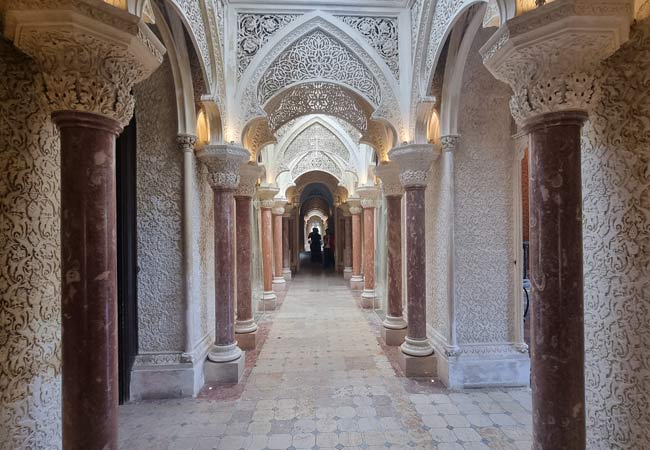
Inside, the building keeps delivering. The Átrio Principal climbs into an octagonal dome supported by rose-marble columns, with horseshoe arches and arabesque plasterwork that owe more to the Alhambra than to anything Portuguese. The music room at the centre of the palace has acoustics so finely tuned that a whisper at one end carries clearly to the other. Take your time here. Most of the rooms have been restored to their 19th-century state, and the labels are good enough to walk through without a guide.
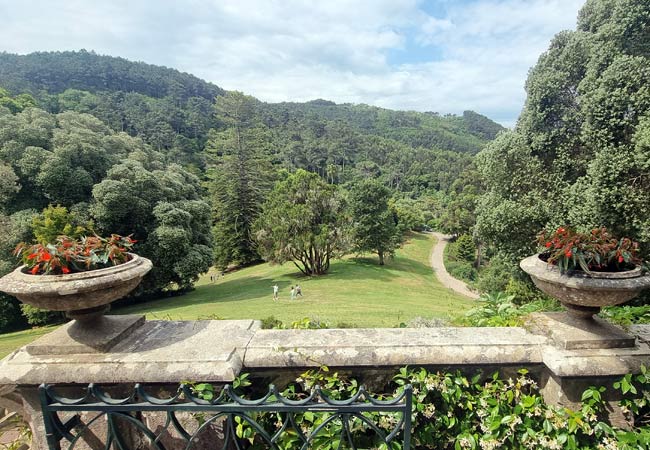
The thirty hectares of gardens are the other reason to come, and in my view the reason that tips Monserrate above Pena. Sir Francis brought in plants from every corner of the British Empire and laid them out across the hillside according to climate and origin. A Mexican garden of agaves and dragon trees sits a few minutes from a fern valley fed by Sintra's perpetual mists, where Australian and New Zealand tree ferns spread their canopies overhead. A faux-medieval chapel ruin, deliberately built as a romantic folly and now genuinely crumbling, sits at the centre of a meadow. Streams and waterfalls thread the whole estate together, engineered in the 19th century to keep the microclimate cool and damp enough for tropical species to survive.
Lunch: Sintra historic centre
Take an Uber or the 435 bus back to the historic centre for lunch. The eating options here are not Sintra's strongest suit, but a handful of places are reliable. Tascantiga does smart Portuguese small plates in a small dining room off Volta do Duche. Incomum offers a more ambitious set menu if you want a longer lunch.
Early afternoon: Palácio Nacional de Sintra
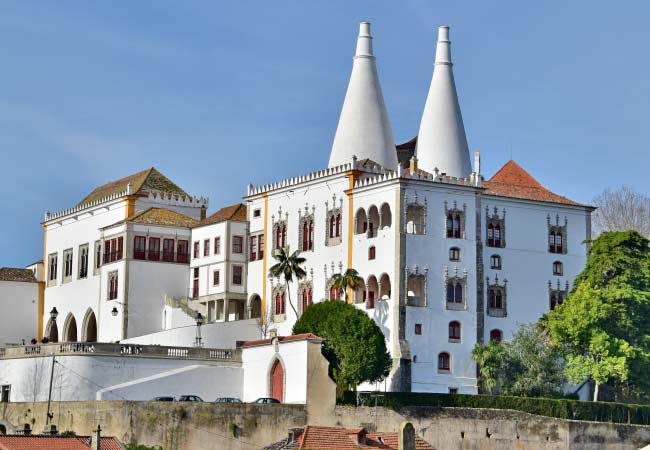
The Palácio Nacional sits in the middle of the historic centre. The two enormous conical chimneys you can see from half the town belong to its medieval kitchen, and they are the building's signature from the outside.
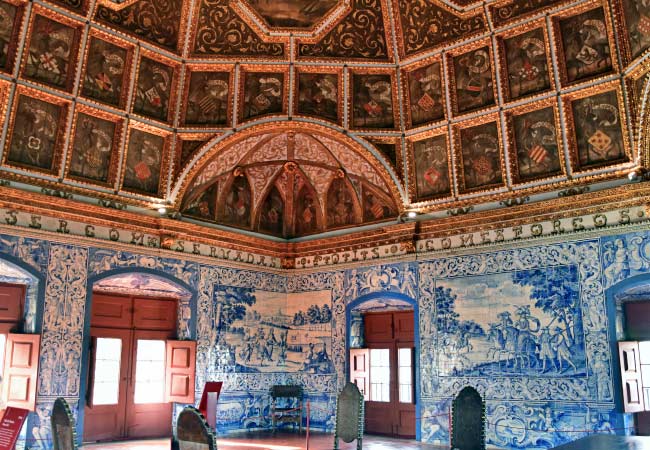
Inside, the Palácio Nacional is the oldest royal residence in Portugal still standing, continuously inhabited by the royal family from the early 15th century until the late 19th. The state rooms tell that long history room by room. The Sala dos Brasões is the showpiece, a domed ceiling carrying the coats of arms of 72 noble Portuguese families, with tile-lined walls below. The Sala dos Cisnes takes its name from the twenty-seven gilded swans painted on its ceiling, a wedding gift from King João I to his daughter Isabel. My favourite is the Sala das Pegas, where João I had the ceiling painted with magpies after his queen caught him kissing a lady-in-waiting; the magpies, mouths full of roses, were his answer to the gossiping court.
The Arab Room holds the most important collection of 15th-century Mudéjar tilework in Iberia, geometric patterns in deep blues and whites that are worth a slow look. The medieval kitchen, with its copper pots and great spits still in place under those famous chimneys, is the rare royal kitchen that still feels like a working room.
Late afternoon: Quinta da Regaleira
Most guides tell you to visit Regaleira first thing in the morning, and most guides are wrong. The estate opens at ten, which is exactly when the late-morning coach tours from Lisbon arrive en masse, and from then until about three in the afternoon the Initiation Well has a queue snaking down the path. Go in the late afternoon instead. From around four o'clock the day-trip crowds drain away to catch their trains back to Lisbon, and the gardens settle into something close to the atmosphere they were built for.
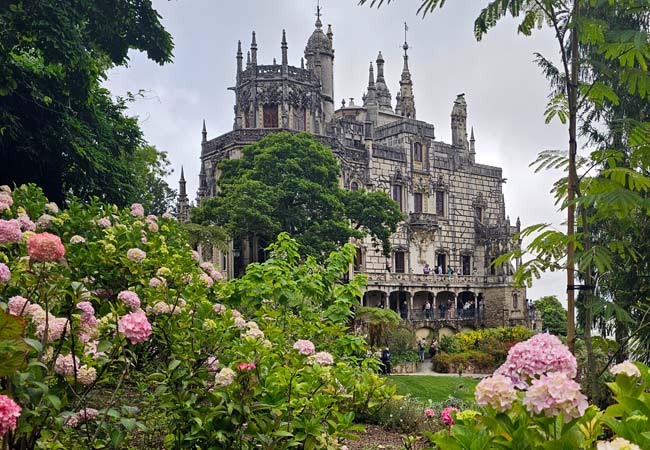
Regaleira is a fifteen-minute walk uphill from the Palácio Nacional, or three or four minutes by Uber. The estate was built between 1904 and 1910 for António Augusto Carvalho Monteiro, a wealthy Brazilian-Portuguese coffee millionaire with a deep interest in alchemy, Freemasonry, the Knights Templar, and the Rosicrucian order, and the means to build them all into a single garden. The result is unlike anything else in Portugal.
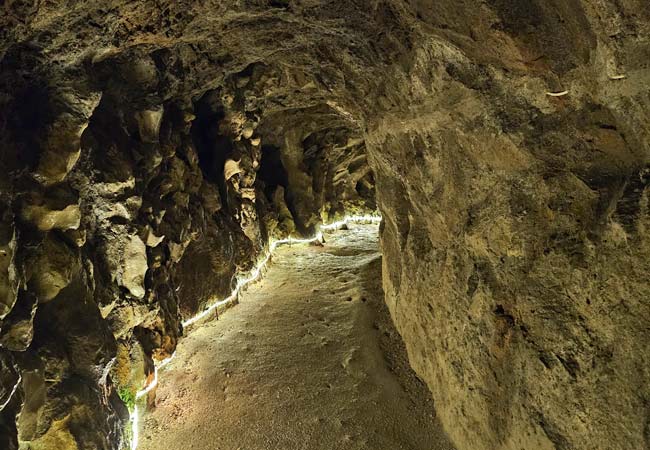
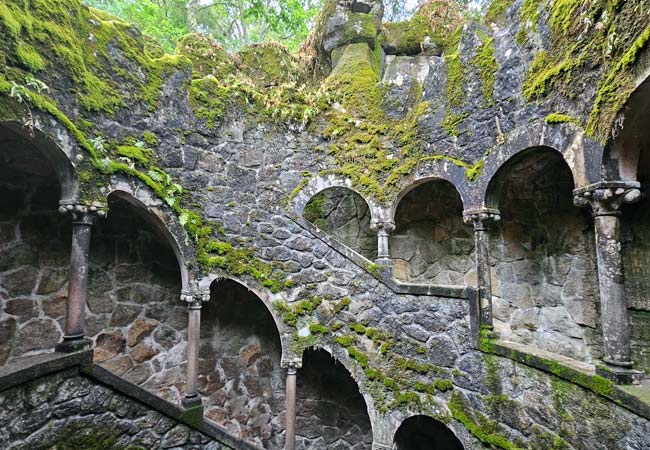
Head straight for the Poço Iniciático, the Initiation Well. It is not a well at all but an inverted tower, a 27-metre spiral staircase descending nine levels into the earth, each level marked with Templar and Rosicrucian symbolism. At the bottom, a network of tunnels carved out of the rock leads you under the gardens, surfacing at hidden grottoes, lakes, and ornamental fountains. By late afternoon you can walk it slowly. In the morning you would have queued for the entrance and shuffled down behind a coach group.
After the well, take your time with the rest of the estate. The Neo-Manueline palace itself is impressive, with stone balconies and pinnacles in the style of Belém. The chapel beside it carries the same dense symbolism as the gardens, with pentagrams and Templar crosses worked into the floor and walls. The grounds reward unhurried exploration. Every path leads somewhere, and the somewhere is usually a fountain, a folly, or a viewpoint you did not expect.
Our most popular guides to Sintra


About this guide I'm Philip Giddings. I have been exploring Portugal since 2001, and writing the independent guides at Sintra-Portugal.com since 2008. I live in Lisbon with my Portuguese wife, Carla, who first took me up to Sintra on one of my earliest trips to the country. We have been going back ever since: summer crowds, autumn fog, the quiet Sunday afternoons of January. The region has changed a great deal in twenty-five years of visits, and we have watched it happen.
The site takes no payment from tourist boards, tour operators, or attractions for inclusion. It is funded by affiliate commissions on tour bookings, disclosed on every page that contains them. Every practical detail in these guides (ticket prices, opening hours, bus routes, time-slot policies) is checked against the official Parques de Sintra site, and verified in person on visits two or three times a year. Read my full bio here.
 -
-


If you've found our content valuable, we'd welcome your support.
The digital publishing landscape has evolved significantly. As a small independent publisher, we face growing challenges. Search engines increasingly favour paid content over organic results, while AI-generated content often reproduces original work without attribution.
To support our work, please consider bookmarking this page (press Ctrl + D) for quick access. If you find an article helpful, we'd be grateful if you'd share it with friends on social media.
For specific questions, please see our Reddit community at r/LisbonPortugalTravel.
Should you notice any outdated or incorrect information, please contact us at [email protected]
Thank you for helping us continue to provide valuable content in an increasingly challenging digital environment.