Sintra-Portugal.com
The best independent guide to Sintra
Sintra-Portugal.com
The best independent guide to Sintra
Sintra, Portugal: an independent tourism guide for 2026
By Philip Giddings · Last updated
A canary-yellow palace floating above the clouds. A subterranean well that spirals nine storeys into the earth. A Moorish castle clinging to a granite ridge. A pink Mughal villa hidden in a forest of tree ferns. This is Sintra. More architectural fantasy in ten square kilometres than most countries manage across their whole map, and all of it within forty minutes of central Lisbon.
The mountains are the reason. The Serra de Sintra catches Atlantic mist on its peaks while Lisbon sweats below, and that cool air drew Portuguese kings, up the hill for the best part of a thousand years. Each one built something stranger than the last. The result is a UNESCO World Heritage Site where a 9th-century Moorish fortress shares a skyline with a 19th-century Romanticist daydream. Beyond the palaces lies a region of Atlantic cliffs, hidden viewpoints, and wild surfing beaches that most day-trippers never see.
Do not try to cram all of this into a single day. Sintra is too dense, too steep, and far too crowded for that. The 434 bus from the station to Pena can take forty minutes in peak season, the entry tickets sell out days ahead, and by ten in the morning queues fill every courtyard. None of this should put you off. It is a reason to plan it properly, to start early, to know which palace to book and when, and to look beyond the four sights every guidebook lists.
I have been exploring Portugal since 2001, and together with my Portuguese wife have spent countless days walking Sintra's hills in every season. This guide draws on those years to help you plan your visit, whether you have a single day or a full weekend. It will help you choose between the palaces worth your time and the ones you can skip, and find the quieter corners of Sintra that the coach tours never reach.
What are the highlights of Sintra?
The Palácio Nacional da Pena
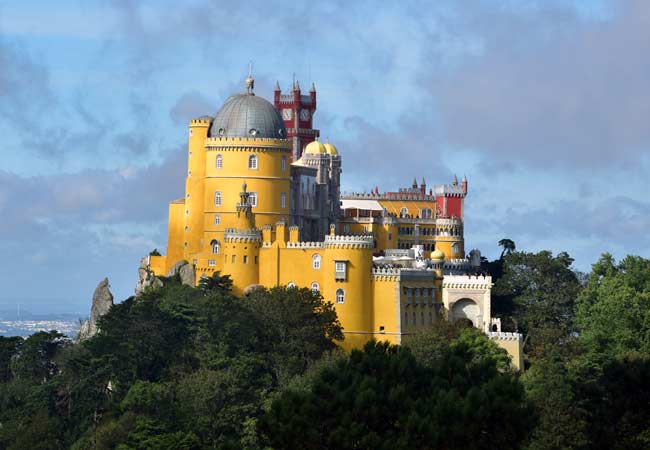
No other building in Portugal looks quite like it. A riot of canary yellow towers, blood red battlements, and tiled domes rising from a forested peak. The Pena Palace is the finest expression of 19th-century Romanticism in the country, the work of a Bavarian-born king who was handed a ruined monastery and an entire mountain to play with. Inside, the state rooms have been restored to how they appeared in 1910, the morning the royal family fled the revolution. This is the palace every visitor to Portugal already knows by sight, and the one I would never let a friend skip - Pena Palace guide
The Quinta da Regaleira
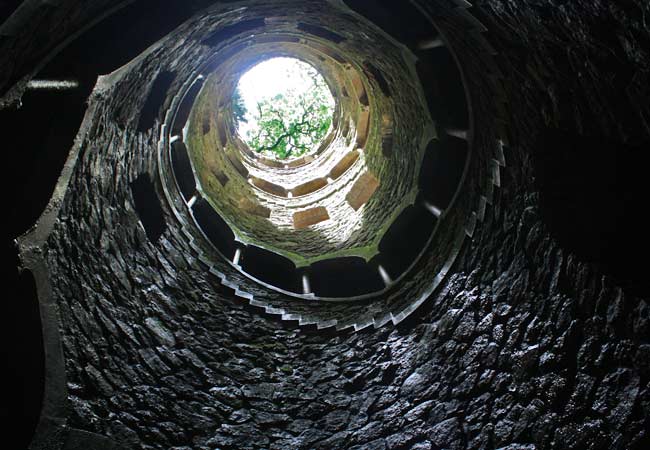
An estate built as a riddle. The Quinta da Regaleira was the private vision of António Augusto Carvalho Monteiro, a Brazilian-born millionaire who in 1893 set out to build a garden encoded with the symbolism of the Knights Templar, the Freemasons, and the alchemists. The result is a four-hectare puzzle of grottoes, hidden tunnels, mossy chapels, and at its heart the legendary Initiation Well, a spiral staircase that descends nine storeys into the earth. Every corner conceals another symbol, and the longer you stay, the more the estate reveals - Quinta da Regaleira guide
The Palácio Nacional de Sintra
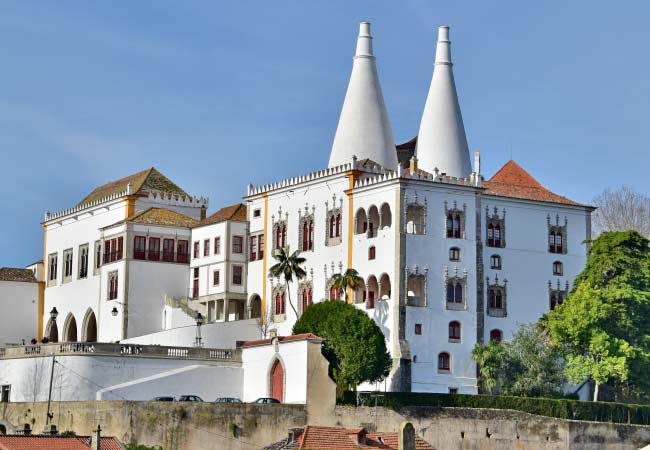
Two vast white cones rise above the rooftops of the old town, a silhouette that has defined Sintra for six hundred years. This is the oldest palace in Portugal still standing, and for more than five centuries it served as the working residence of the Portuguese court. Inside, each room records the taste of a different monarch: the Moorish tiles of the Sala dos Árabes, the painted swans of the Sala dos Cisnes, and the seventy-two noble coats of arms ringing the gilt vault of the Sala dos Brasões - Palácio Nacional guide
The Castelo dos Mouros
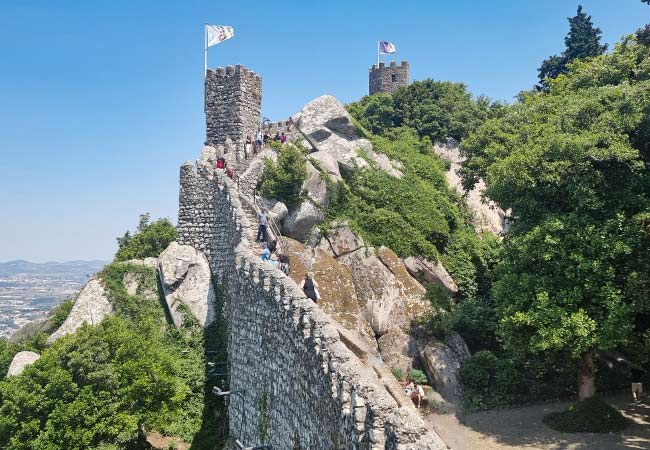
A line of stone battlements snaking along the ridge above Sintra, built by the Moors in the 9th century to guard the road to Lisbon. The fortress fell to Christian forces in 1147 and slowly crumbled into the forest, until King Ferdinand II rebuilt it in the 19th century as a Romantic ruin, deliberately restored to look as if it had never been touched. Climb the towers on a clear morning and you will see why the Moors chose this ridge: the Atlantic coast, the Tagus estuary, and on the clearest days the rooftops of Lisbon - Castelo dos Mouros guide
Monserrate Palace
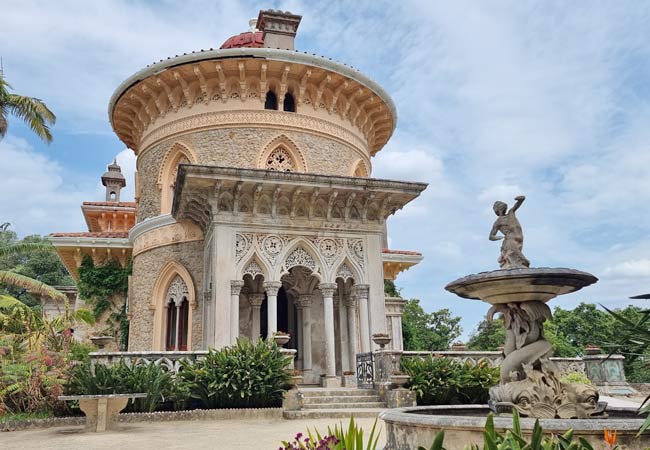
Sintra's most beautiful palace is not the one you came to see. A pink stone villa with three domed towers, set in thirty hectares of garden three kilometres west of the town. A Mughal palace in a Portuguese forest, with a long facade held in perfect symmetry and stone latticework carved as fine as lace. Monserrate sits off the coach-tour circuit, and on a quiet morning you may have the place almost to yourself. - Monserrate guide
Exploring the Wider Sintra Region
The palaces are what bring most visitors to Sintra, but the Serra de Sintra and the coastline that surrounds it hold many of the region's quieter pleasures.
Hidden deep within the forest is the Convento dos Capuchos, a 16th-century monastery whose monks lined their cells with cork to ward off the damp, building their retreat into the rock of the mountain itself. Further west, atop a rocky outcrop, the Santuário da Peninha is a small chapel that commands one of the finest views in Portugal, taking in the entire western coastline of the Serra.
The coast itself is full of small pleasures. The cliff-clinging village of Azenhas do Mar holds a natural rock pool fed by the Atlantic, and a few kilometres south is the easygoing beach town of Praia das Maçãs, still connected to Sintra by the tram that has rattled down the hill since 1904. At the western tip of the region stands the Cabo da Roca, a headland of towering cliffs and powerful Atlantic swell that marks the most westerly point of mainland Europe.
The coastline also hides some of the best beaches in the country. The wild surfing shores of Praia do Guincho, the untamed Praia da Ursa requires a steep cliffside scramble that keeps the crowds away, and Praia da Adraga is the kind of cliff-backed Atlantic beach that you will remember long after you have left Portugal.
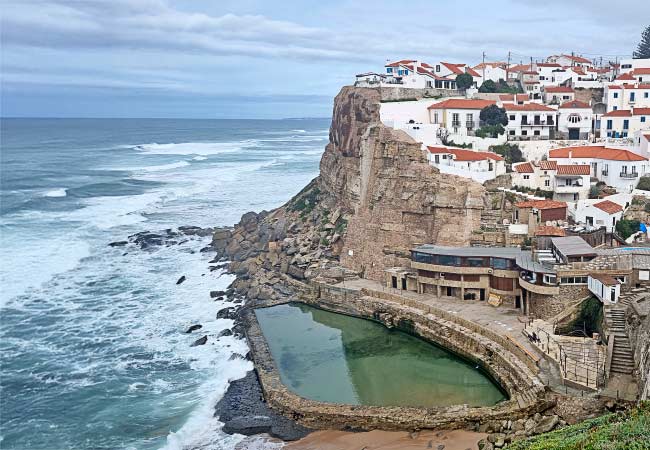
Azenhas do Mar with its natural, ocean-fed swimming pool and distinctive cliff top houses.
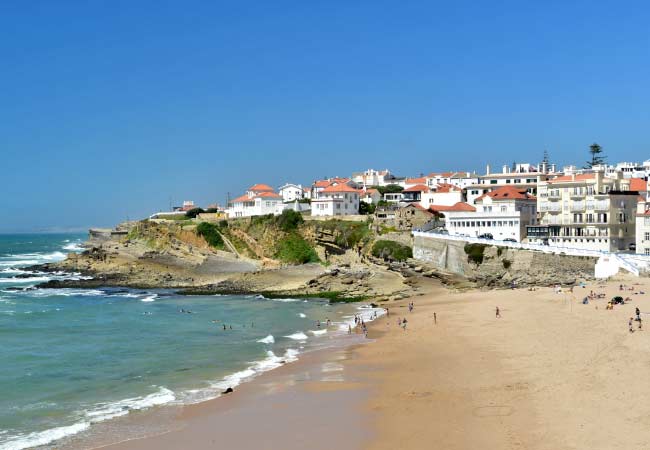
The glorious sands of Praia das Maçãs, just a scenic 15-minute tram ride from the centre of Sintra.
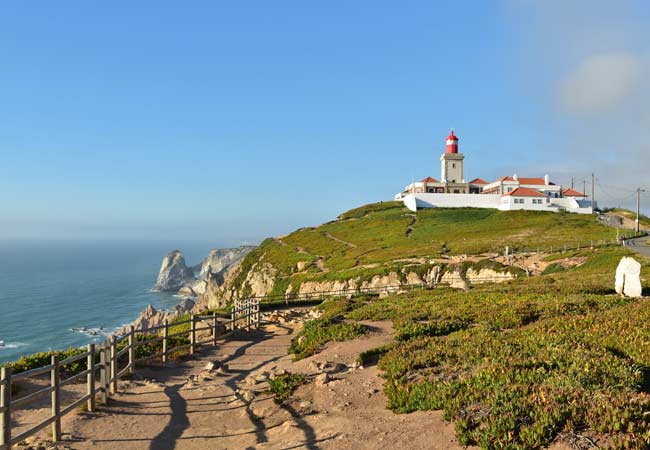
The wind-blasted and rugged cliffs of Cabo da Roca, marking the westernmost point of mainland Europe.
The maps below show the highlights of Sintra. The first covers Sintra town and the Parque da Pena, and the second the wider Sintra region, with the beaches in yellow and Sintra town shaded in blue. Click either map for a full-size version.
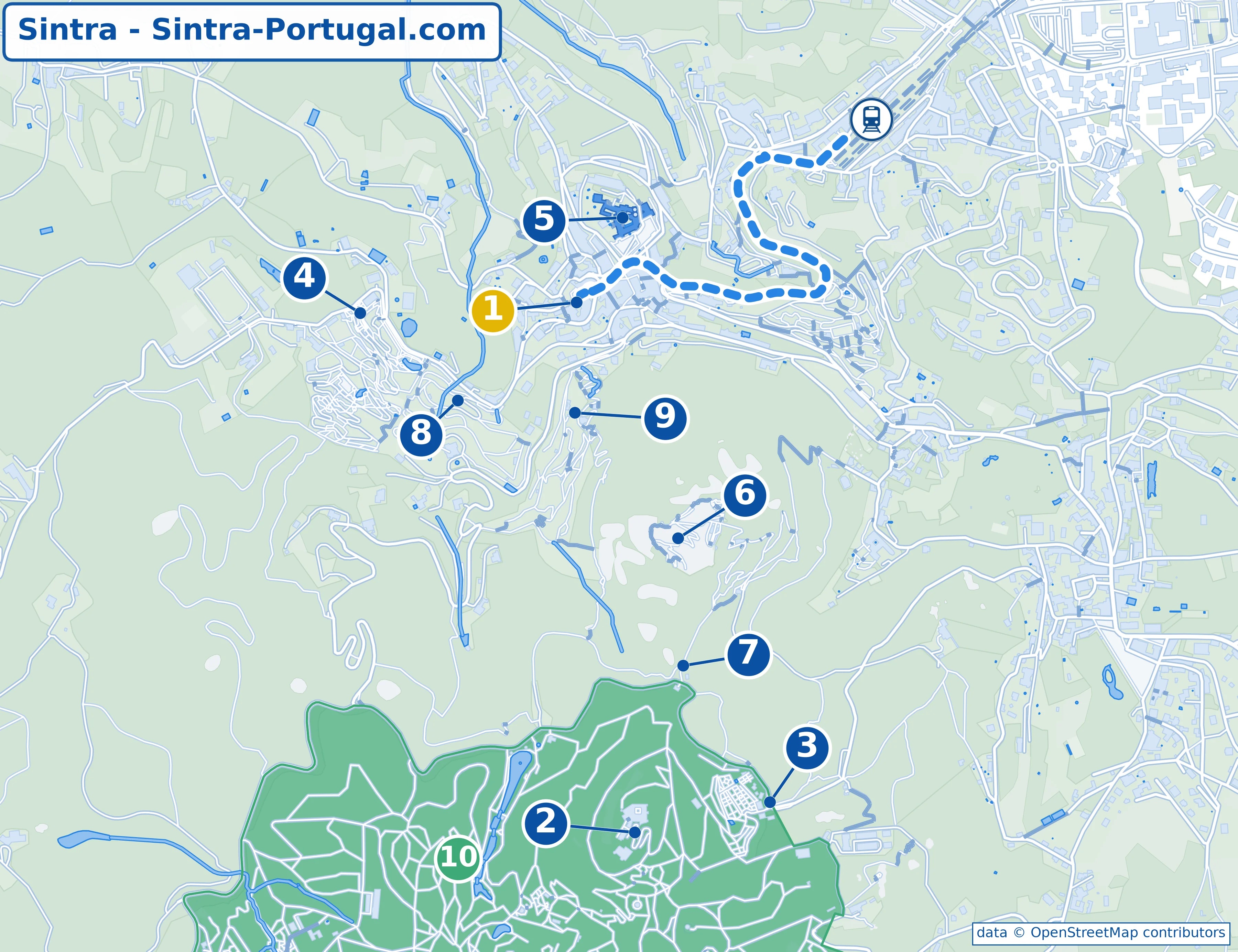
Legend 1) Sintra town 2) Palácio Nacional da Pena 3) Pena palace entrance 4) Quinta da Regaleira 5) Palácio Nacional de Sintra 6) Castelo dos Mouros 7) Moorish castle entrance 8) Palácio Biester 9) Vila Sassetti 10) Parque da Pena
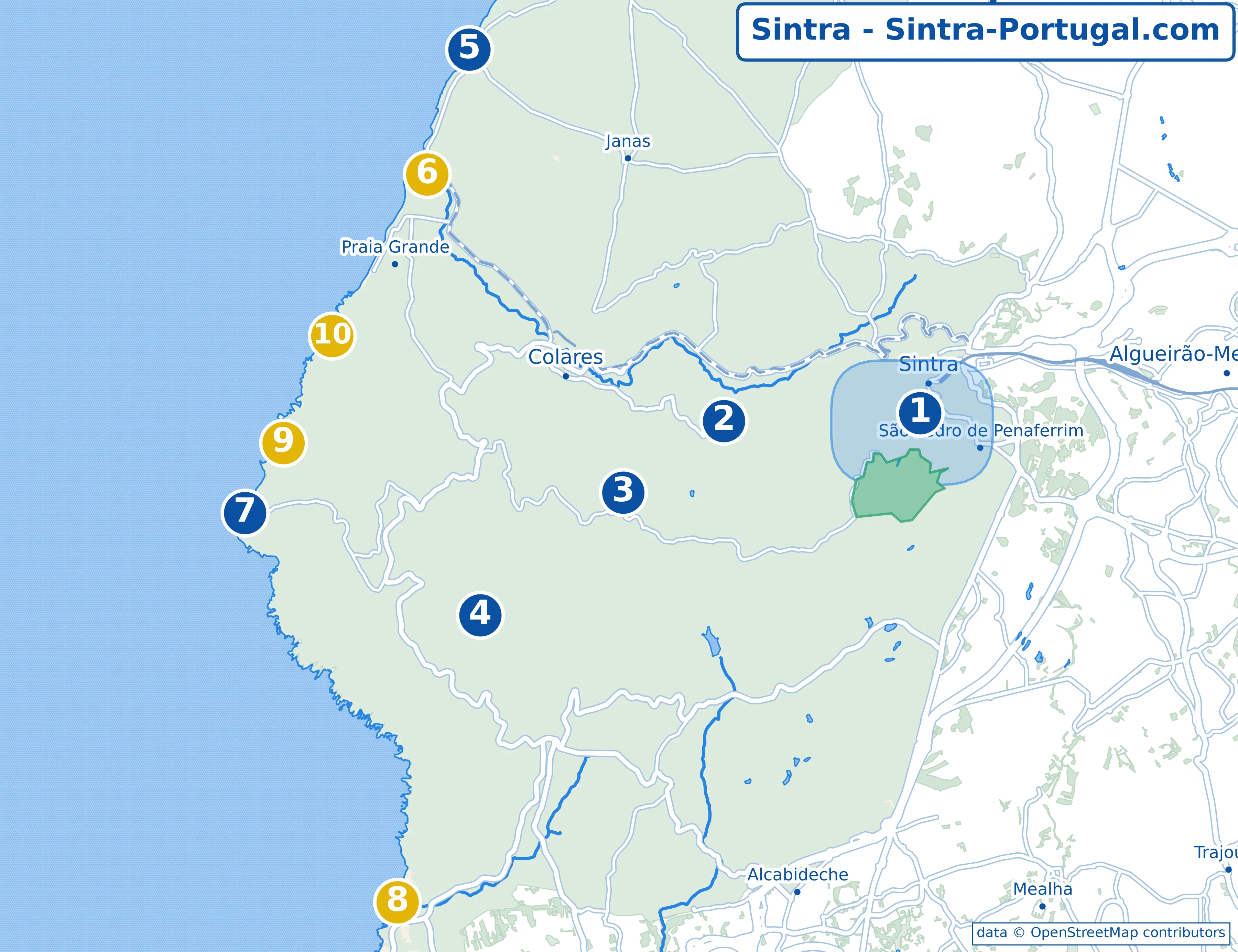
Legend 1) Sintra town 2) Palácio de Monserrate 3) Convento dos Capuchos 4) Santuário da Peninha 5) Azenhas do Mar 6) Praia das Maçãs 7) Cabo da Roca 8) Praia do Guincho 9) Praia da Ursa 10) Praia da Adraga
Related articles: Sintra sights
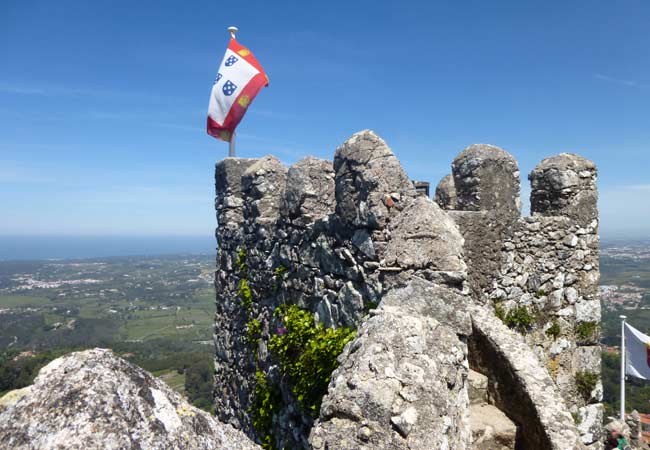
The battlements of the Moorish castle provide spectacular views over the Sintra region
Planning a Day Trip to Sintra
Sintra is the most popular day trip in Portugal, and the logistics reflect this. A regular train from Lisbon, direct buses from Cascais and Estoril, and a tourist bus that loops the hilltop sights all make the day manageable, but only if you arrive with a plan. The visitors who treat Sintra as something to improvise on the day are the ones I see in the long queues, or packed on buses that move barely faster than walking pace.
The classic day trip, the one I have walked with friends and family more times than I can count, follows this route:
• Travel to Sintra by train from Lisbon, or by bus from Cascais or Estoril
• Visit the Palácio Nacional da Pena, the headline of the day
• Explore the gardens and grounds of Pena Park
• Visit the Castelo dos Mouros (optional, depending on time and stamina)
• Have lunch in the historic centre
• Wander the cobbled streets of the old town
• Visit the Quinta da Regaleira (or, as an alternative, the Palácio Nacional de Sintra)
This order is not arbitrary. It follows the route of the 434 tourist bus, which loops between the train station, the hilltop palaces, and the historic centre. It also puts the busiest sight first, before the coach tours from Lisbon arrive at around ten. Get to Pena early, work your way down the hill through the morning, eat lunch in the old town, and you will reach the Quinta da Regaleira in the afternoon when the worst of its crowds have thinned. Reverse the order, and you will hit both Regaleira and Pena at their peak times.
A note on tickets:
The two big sights of Sintra, the Palácio Nacional da Pena and the Quinta da Regaleira, both operate on timed-entry tickets and must be booked online before you arrive. I have watched too many visitors turn up at the Pena gate on a summer morning expecting to walk in, only to find the next available slot is four hours away, or that the day has sold out entirely.
Tickets can be booked through GetYourGuide.com. Aim for an early Pena slot (before 10 am) and a later Regaleira slot (after 3 pm). This single decision, made two days before your trip, will shape your Sintra day more than anything else.
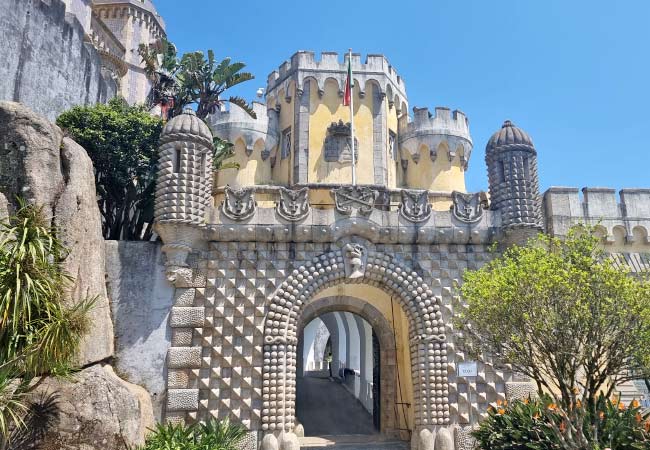
The decorative entrance to the Pena Palace
Navigating the crowds in Sintra
There are two ways to beat the summer crowds in Sintra. The first is timing, which I have already covered: book Pena for the first slot of the day, Regaleira for the last, and you will see both at their quietest. The second is harder for most visitors to accept, but it is the one I would urge you to consider. Skip one of the two famous palaces altogether and visit a quieter one instead.
The Palácio de Monserrate is the obvious alternative to Pena. Three kilometres west of the historic centre, off the coach-tour circuit and out of reach of the 434 bus, it is in my judgement the most beautiful palace in Sintra. A pink villa with three domed towers and Mughal-inspired stonework, set in thirty hectares of botanical garden. On a quiet morning you may walk its rooms with a handful of other visitors. Most coach groups never make it this far down the hill.
The Palácio Biester is the alternative to Regaleira. A Gothic Revival mansion designed by Luigi Manini, the same architect responsible for the Quinta da Regaleira. It carries the same sense of mystery and shadow, sits a five-minute walk from the historic centre, and only opened to the public in 2022, which is why it remains the quietest of Sintra's major sights.
Eat early, or eat late:
My last piece of advice, and it is the one most often ignored. The restaurants in the historic centre fill up between 12:30 and 2:00 pm, and a thirty-minute wait for a table is the last thing you want in the middle of a packed day. Eat before noon, or after 2 pm, and you will walk into almost any restaurant you like – I’ve listed my favourite restaurants further in this guide.
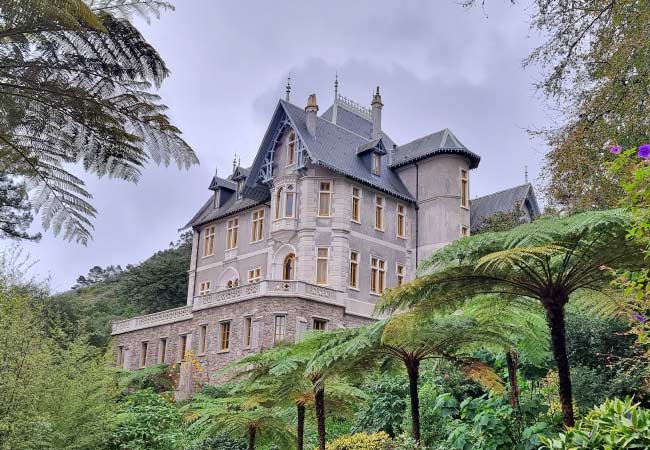
The Palácio Biester
Is an Organised Tour the Best Way to See Sintra?
For some visitors, yes. A tour takes the train timetable, the timed tickets, and the 434 bus off your plate, and hands you a guide who knows the order to walk the sights in. If you are short on time,or simply want someone else to carry the day, a tour is the easier way to see Sintra. It is also the only practical way to combine Sintra with the coastal town of Cascais in a single day, a pairing that does not quite work on public transport but flows naturally with a driver.
A good guide adds something a guidebook cannot. The Romanticist symbolism of Pena, the alchemical coding of the Quinta da Regaleira, the medieval history of the Moorish castle: these are sights that reveal more in conversation than in a paragraph on a panel, and the right guide will turn an interesting day into a memorable one.
That said, an organised tour is not always the better choice. If you want to set your own pace, linger in the gardens at Pena, or eat a slow lunch in the historic centre, the independent day in this guide will serve you better. Tours move on a schedule, and the schedule is rarely yours.
I have worked with GetYourGuide.com for the last seven years, and below are the best-rated tours that cover the routes most visitors want.
The links above are affiliate links, and I earn a small commission if you book through them. I really appreciate it, as it helps me keep this website running.
How to Get to Sintra
Sintra is well-connected by public transport, making it a straightforward day trip from Lisbon, Cascais, and Estoril.
By Train from Lisbon The recommended, easiest, and most popular way to travel from Lisbon to Sintra is by train. There are two inexpensive train services:
• From Rossio Station: This is the best option for most tourists, as the station is centrally located near the Baixa and Chiado districts. The journey takes approximately 40 minutes.
• From Oriente Station: This line is convenient if you are travelling from the airport or the Parque das Nações district. The journey takes approximately 47 minutes.
Both train lines are part of the Lisbon urban network. A return ticket costs €5.10 and is charged to the reusable "Navegante" card. Services are frequent, with multiple departures per hour, running from early in the morning until late at night.
A Warning About Driving to Sintra: We strongly advise against driving to Sintra. The historic centre is characterised by narrow, winding roads completely unsuitable for the volume of modern traffic. Parking is extremely limited, and during peak season, the area becomes gridlocked with constant traffic jams as drivers hunt for non-existent spaces. Taking public transport is a significantly less stressful option.
By Bus from Cascais and Estoril
Direct bus services, operated by Carris Metropolitana, are the best way to travel to Sintra from the coastal resort towns.
• From Cascais, you have two main options departing from the Cascais Terminal:
-Route 1623: This is the direct and faster service, with a journey time of approximately 30 minutes.
-
Route 1624: This is a longer, scenic coastal route that travels via the Cabo da Roca cliffs, taking around 60 minutes.
• From Estoril, the primary service is the scenic Route 1624, which also departs from near the train station.
Important Note: These bus services terminate at Portela de Sintra train station, not in the historic centre. This is a significant 2km walk from the main tourist area. Upon arrival, you will likely need to connect to the 434 tourist bus to reach the Palácio da Pena and other key sights.
Related articles: Lisbon to Sintra - Cascais to Sintra

The 434 and 435 tourist buses
The 3km walk from the historic centre to the Palácio da Pena is up a very steep hill and is not suitable for most visitors, especially in the heat of summer. The 434 tourist bus provides the only practical way to avoid this challenging walk. The bus service connects the train station to the historic centre, then climbs the hill to the Palácio Nacional da Pena (with a stop for the Castelo dos Mouros) before returning to the train station.
The 24-hour hop-on-hop-off ticket, which covers all Sintra bus routes, costs €10.96. Buses depart from outside the Sintra train station every 15 minutes during the high season.
It is important to be prepared for the journey itself. Expect the bus to be extremely crowded, with standing room only for the surprisingly long 30-minute ride to the top of the hill. The long ride is due to the historic centre of Sintra being closed to traffic, forcing the bus onto a narrow ring road that is often clogged with tourist vehicles. In the peak season, the bus ride can be longer than 40 minutes with significant sections of nauseating stop-go traffic.
As this is the only road to the summit, taking an Uber, Bolt, or Tuk-Tuk will be no faster than the bus. Uber/Bolt drivers will often decline fares from the town or station up to the Pena Palace due to the traffic.
The 435 tourist bus connects the train station to the Palácio de Monserrate, passing the historic centre, the Quinta da Regaleira, and the Seteais Palace. This bus is ideal for a second day in Sintra.
Related articles: The 434-tourist bus
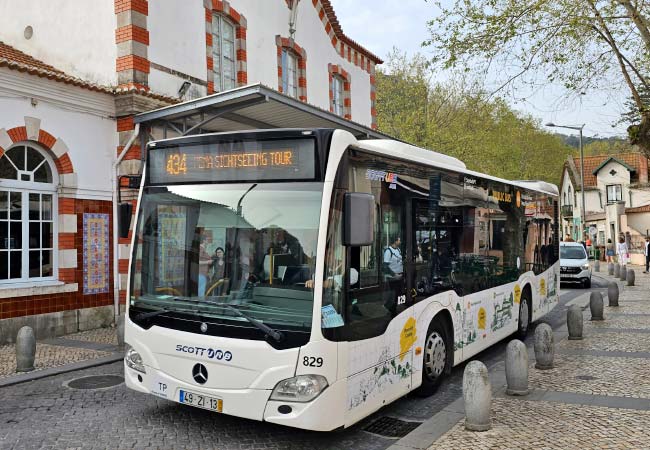
The 435 and 434 buses waiting at the train station
Why spend a night in Sintra?
If you plan to spend two or three days visiting Sintra, it is recommended to stay within the town, instead of travelling in from Lisbon each day. The main advantage of being based in Sintra is that the town can be enjoyed once the day-trippers and coach tours have left.
The key national monuments of Sintra have extending opening hours, allowing you to visit before or after the daytime rush. The town offers a fantastic range of hotels to choose from, with many of these in keeping with the style and charm of the region.
The map below shows the location of hotels and rental rooms in Sintra, and by altering the date to your holiday, the map will display current prices:
Two or three days in Sintra
Sintra is often visited as a day trip from Lisbon, but there are sufficient attractions to easily fill two or three days of sightseeing. Suggested itineraries for two or three days in Sintra, which follow on from the 1-day trip include:
A second day in Sintra
• Quinta da Regaleira and gardens (or the Palácio Nacional de Sintra)
• Palácio de Seteais
• Palácio de Monserrate
• Vila Sassetti and gardens (optional)
• Hike up the Caminho de Vila Sassetti (optional)
Third day in Sintra
• Convento dos Capuchos
• Peninha Sanctuary and viewpoint (highlight)
• Cabo da Roca
• Praia da Ursa or Praia da Adraga
• Chalet da Condessa D'Edla (Pena Park)
• Hike to Cruz Alta (Pena Park)
Note: this day trip requires a car
Related articles: A second day in Sintra - Sintra’s secret sights
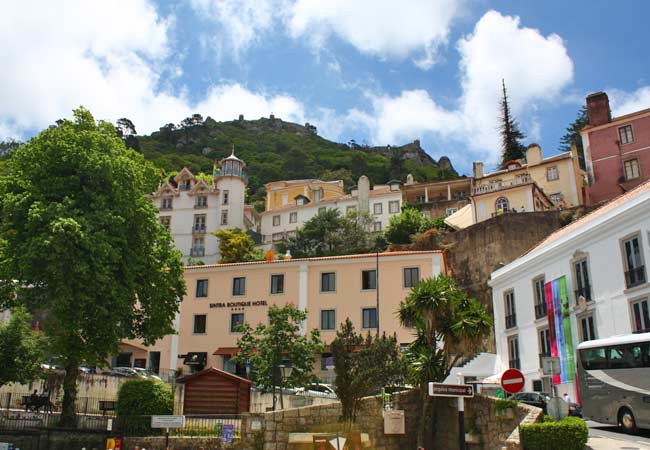
Why are there so many palaces and grand mansions in Sintra?
Historically, the reason was due to the slightly cooler climate that the hills of the Serra de Sintra provide. This enticed the nobility of Portugal to construct their summer residences here. During the 19th century, Sintra was a popular destination for Europe's wealthy artisans and elite, who built elaborate mansions following the Romanticism style of architecture.
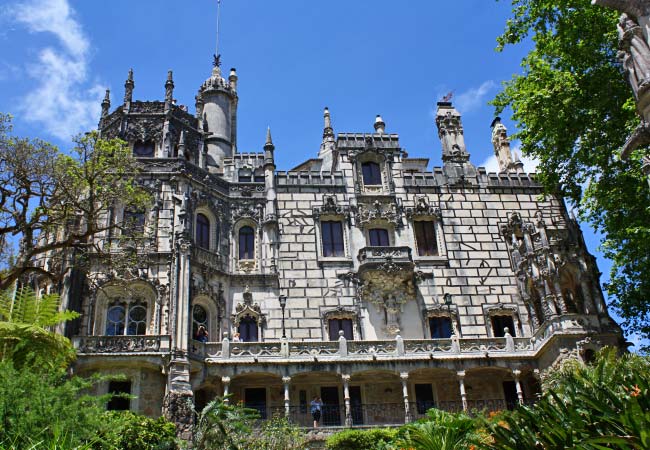
The Quinta da Regaleira
Our favourite attractions in Sintra
Our favourite attractions in Sintra are:
1) Palácio Nacional da Pena 2) Quinta da Regaleira 3) Palácio Nacional de Sintra 4) Palácio de Monserrate 5) Castelo dos Mouros 6) Palácio de Seteais 7) Vila Sassetti
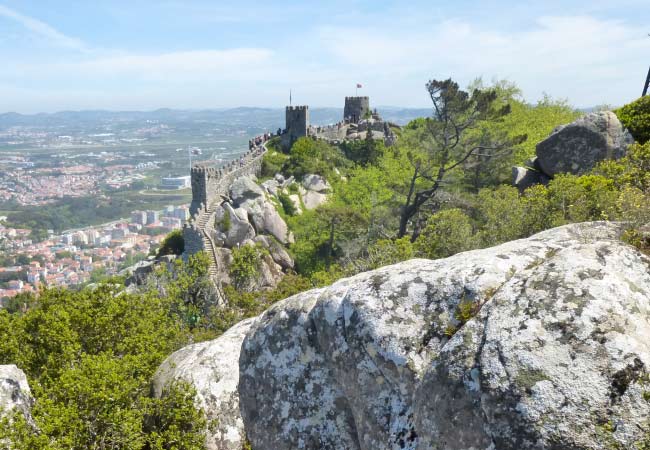
The Castelo dos Mouros is postioned high above the old town of Sintra
The Romanticism style of architecture
The town of Sintra is regarded as one of Europe's finest examples of the whimsical and colourful Romanticist style of architecture. This elaborate, 19th-century design style was inspired by a love of art and the mysticism of ancient cultures, creating decorative and flamboyant buildings, of which the Palácio da Pena is the finest example.
Discover more of Sintra with our most popular guides


About this guide I'm Philip Giddings. I have been exploring Portugal since 2001, and writing the independent guides at Sintra-Portugal.com since 2008. I live in Lisbon with my Portuguese wife, Carla, who first took me up to Sintra on one of my earliest trips to the country. We have been going back ever since: summer crowds, autumn fog, the quiet Sunday afternoons of January. The region has changed a great deal in twenty-five years of visits, and we have watched it happen.
The site takes no payment from tourist boards, tour operators, or attractions for inclusion. It is funded by affiliate commissions on tour bookings, disclosed on every page that contains them. Every practical detail in these guides (ticket prices, opening hours, bus routes, time-slot policies) is checked against the official Parques de Sintra site, and verified in person on visits two or three times a year. Read my full bio here.