Sintra-Portugal.com
The best independent guide to Sintra
Sintra-Portugal.com
The best independent guide to Sintra
Palácio de Monserrate (Monserrate Palace), Sintra: a guide for 2026
Sintra's best palace is not the one you came to see. While the coaches grind up to Pena and the queues snake around the Quinta da Regaleira, a tri-towered villa of pink stone sits in near silence three kilometres down the road. A Mughal palace in a Portuguese forest. A long pink facade held in perfect symmetry, three domed towers punctuating the roofline, and stone latticework as fine as anything in Andalusia. It should not work. It does.
The Palácio de Monserrate is the work of Sir Francis Cook, an English textile magnate who bought a ruined estate in 1856 and spent the next thirty years building the most unusual house in Sintra. Inside, the Átrio Principal climbs into an octagonal dome, its rose marble columns framing some of the finest stonework you will see anywhere in Europe.
Outside, Cook laid out thirty hectares of garden across the hillside, planted with specimens he had shipped in from every corner of the British Empire. A Mexican garden of agaves sits a few minutes from a fern valley fed by Sintra's perpetual mists. An artificial waterfall tumbles past Australian rubber trees. A faux-medieval chapel ruin is slowly being swallowed by the forest. On a quiet morning they are among the most atmospheric places anywhere in Portugal.
What makes Monserrate so appealing is what it is not. It is not on the standard Sintra coach-tour circuit. It does not sell out its tickets days ahead. You do not need to set an alarm to beat the queues. Most visitors never make it this far down the hill, and that, precisely, is the point.
I have been exploring Portugal since 2001, and together with my Portuguese wife have returned to Monserrate in every season. It is where I send friends in Sintra, to show them what the town was like before tourism. This guide will help you see why.
A note before you go: a €3 million restoration of the roofs and Copa dos Frescos is under way until early 2027, with scaffolding in place across parts of the building, but the palace remains open throughout.
My highlights of the Palácio de Monserrate
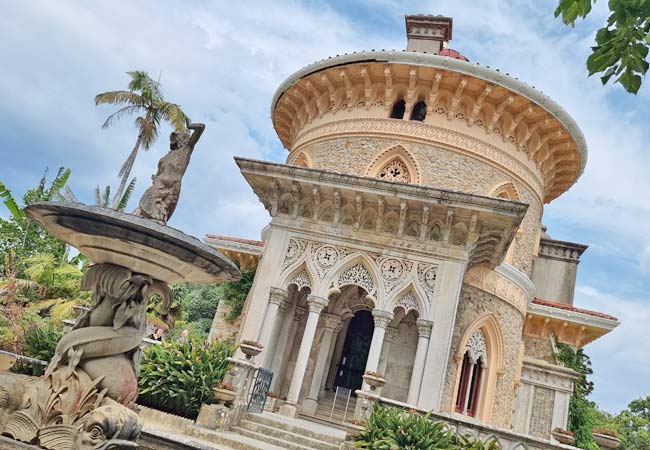
The southern tower. A great circular tower wrapped in an arched stone terrace, built to dazzle Cook's guests on arrival. The curved pink facade rises in three tiers of carved arches, looking out over what was once a Japanese garden.
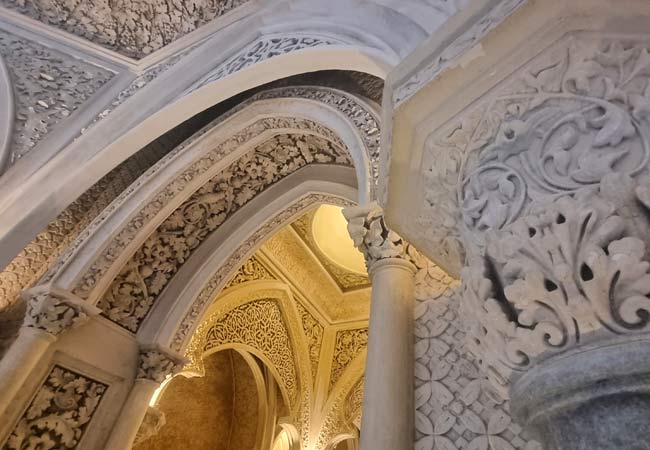
The Átrio Principal. The central atrium of the palace, rising into an octagonal dome inspired by the Duomo in Florence. Marble columns and Gothic arches frame walls of carved stone latticework as fine as anything in the Moorish palaces of Andalusia.
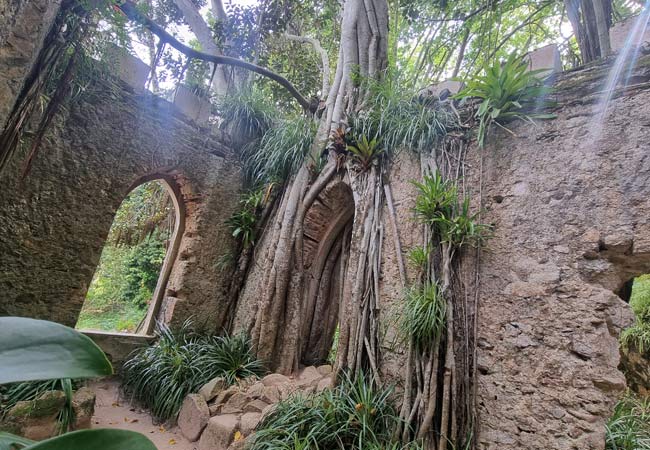
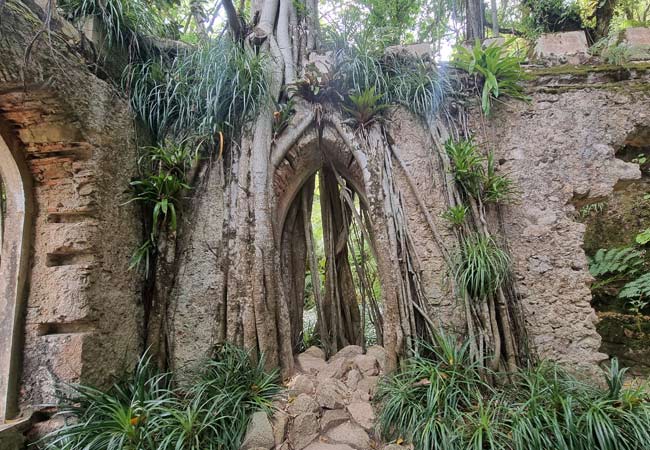
The Ruínas da Capela, A roofless Gothic chapel slowly being consumed by the roots of a vast Australian rubber tree. Half folly, half history, built it as a Romantic ruin to evoke a lost medieval past.
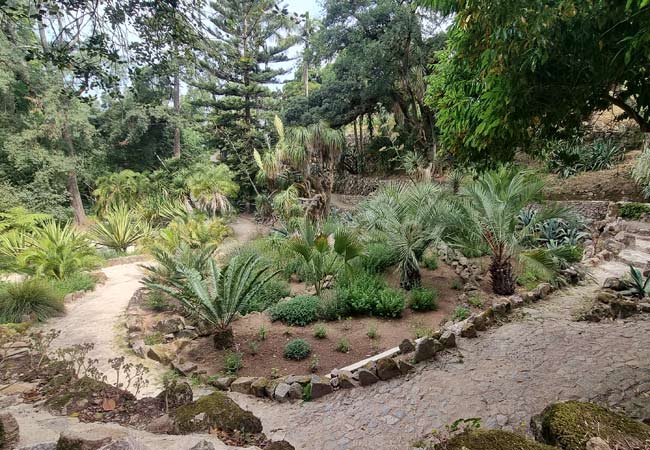
The Mexican Garden. Agaves, aloes, yuccas, and Bunya pines, laid out on a sun-baked terrace below the palace. Part of Cook's grand scheme of geographic gardens, where you cross from desert to rainforest in under a hundred paces.
Tourist information for the Palace of Monserrate
The entrance fee for the Palácio de Monserrate is €12 for adults, €10 for youths (aged 6 to 17) and €6.50 for seniors. Tickets can be purchased from the ticket booth upon arrival, or in advance from the Parques de Sintra website or GetYourGuide.com:
www.getyourguide.com/
Pre-purchasing tickets isn't necessary for Monserrate, as it rarely gets as busy as other attractions in Sintra. The advantage of buying tickets from GetYourGuide is the ability to make purchases in your home currency, avoiding conversion fees or poor exchange rates.
The grounds of the Palácio de Monserrate are open from 9am to 7pm, with the palace itself open from 9.30am to 6.30pm (last admission at 6pm). A typical visit will last around two hours, with one hour in the gardens, 30 minutes in the palace and 15 minutes walking between the palace and the ticket office.
A visit to Monserrate involves a significant amount of walking, including a very steep hill between the ticket office and the palace.
Insight: Always plan your visit to Monserrate on a dry day. This is not a tourist attraction to visit on a wet day or if rain threatens, as the majority of Monserrate's sights are outside.
As one of the least visited buildings of the Sintra region, Monserrate is rarely packed with tourists. This makes it a good option to visit during the peak hours (11am to 2pm) of the summer season, when the other sights will be very crowded.
Within the palace grounds is a modern café with pleasant outside seating, but sadly the range of food and drinks served is very basic, with coffee from a machine and no freshly cooked food (a real missed opportunity by Parques de Sintra). There are no other shops or cafes close to the entrance of the Palácio de Monserrate.
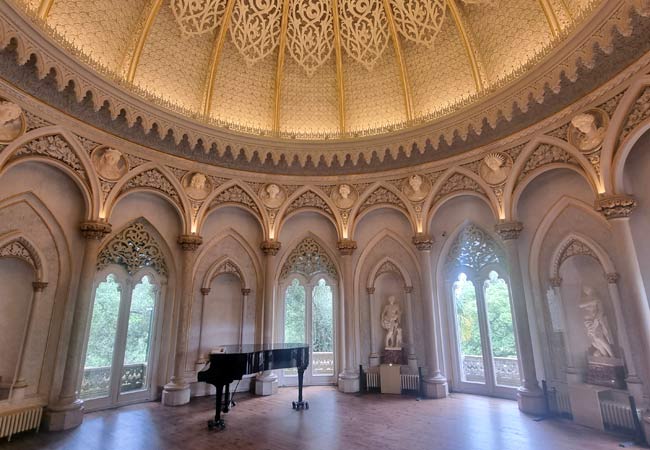
The music room fills the entire northern tower.
Would a tour suit you better?
After twenty-five years of visits, I know how tiring a day in Sintra can be. A well-run tour takes that hassle off your hands. These are the Sintra tours I've used and happily recommend to friends and family:
The links above are affiliate links, which means I earn a small commission if you book through them, at no extra cost to you. I really appreciate it, as it helps me keep this site free and running.
Travel to Monserrate Palace
The Palácio de Monserrate lies 3.5km to the west of the historic centre of Sintra.
This is too far for most people to walk, and the route follows narrow, twisting roads that are not really suited for pedestrians.
The best method of travel to Monserrate is to catch the 435 bus service that departs from Sintra train station. A one-way ticket will cost you €3.75, but often the 24-hour hop-on, hop-off ticket for all Sintra buses (at €12.50) will be encouraged for sale first. This bus service can get very busy as it also serves the Quinta da Regaleira, which is where the majority of passengers will exit the bus.
Insight: With the banning of traffic from the historic centre of Sintra, the 435 bus route goes on a convoluted 8km journey to reach Monserrate. During the peak season, this bus ride can take longer than 20 minutes due to the large amount of tourist traffic.
Should you prefer a private means of transport, taxis and tuk-tuks are available. However, they are a costlier choice, with fares typically exceeding €20 for the ride from the station. A more cost-effective alternative is Uber or Bolt, with their fares falling within the €6 to €8 range, but there can be very high demand during peak hours.
There is a large car park at Monserrate, and this is one of the only monuments we would recommend driving to if you have a car.
Getting the most from your visit to the Palácio de Monserrate
The best route for exploring Monserrate is to visit the gardens first (the Floresta Nativa, Beckford waterfall, the chapel ruins, the Mexican garden and rose gardens), then walk up the lawns to the palace. After seeing the interior of the palace, the route back to the entrance passes the scented pathway, the Japanese garden and the fern valley.
This route is recommended since the majority of the gardens are hidden from the main building, and it is very easy to walk directly from the ticket office to the palace and inadvertently bypass most of the beautiful grounds.
The map below shows a suggested tour route of the Palácio de Monserrate, which is the basis for the image tour in the next section. The yellow line marks the hiking route to the Convento dos Capuchos (Note: zoom out to see all of the points).
Legend: 1) Ticket office 2) Arco de Vathek 3) Floresta Nativa 4) Beckford waterfall 5) Ruínas da Capela de Monserrate 6) Fern Valley 7) Ornamental lakes 8) Jardim de México 9) Rose garden 10) Lawn 11) Garden entrance 12) North Tower (music hall) 13) South Tower (main entrance) 14) Japanese garden 15) Indian gate 16) Boulder House 17) Café 18) Lagoa de Merendas 19) Lagoa dos Mosqueiros 20) Convento dos Capuchos
To the south of the Palácio de Monserrate (on the opposite side of the road) is the Lagoa de Merendas Lake, which is a pleasant location for a picnic.
Beyond the lakes lies a series of dirt roads that cross the Serra de Sintra hills. Maintained primarily for firefighting in the forest, these tranquil and scenic paths offer multiple routes, including those to the Lagoa dos Mosqueiros (1km) and the Convento dos Capuchos (2.3km).
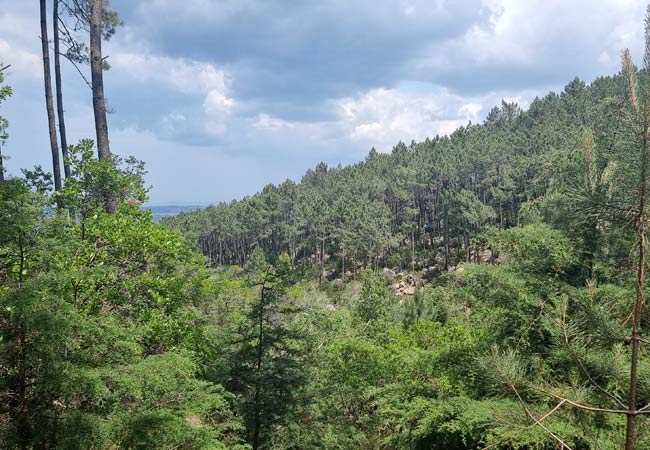
The pristine forests close to the Lagoa dos Mosqueiros
Image tour of the Palácio de Monserrate
There is a lot to see at the Palácio de Monserrate, and this image tour will help you get the most from the palace and gardens.
After purchasing your tickets, take the small path on the left, which follows the perimeter wall. This leads through the Floresta Nativa, a section of the original oak forest that once covered the entirety of the Serra de Sintra.
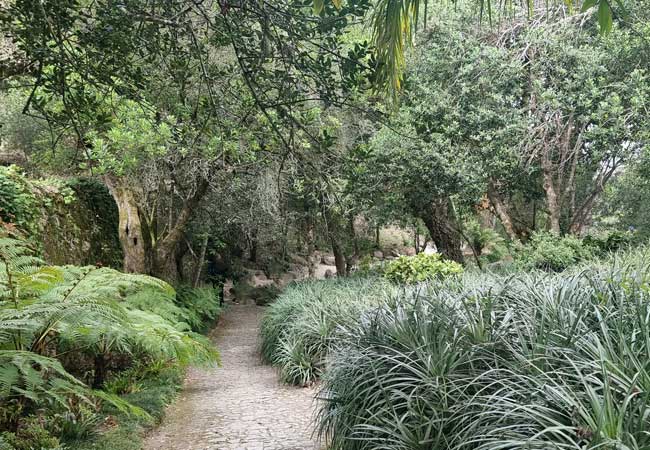
This leads past the Arco de Vathek, but the path down the hill has been sadly washed away by Sintra's constant rains.
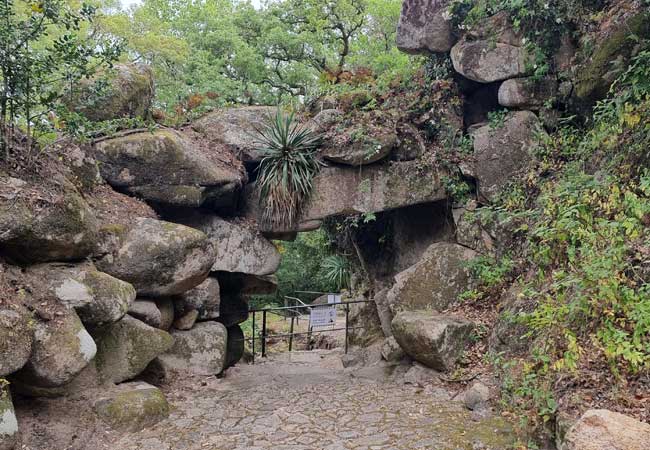
The path weaves through the forest and descends down the hill to the base of Cascata de Beckford (Beckford waterfall) and the stepping stones that cross the pond. The waterfall is artificial, and one of the many streams that cross the estate had to be diverted to create it.
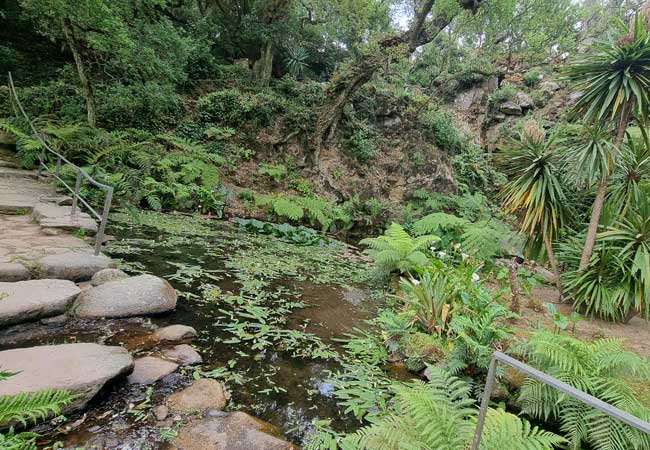
Next is one of the highlights of the Palácio de Monserrate, the Ruínas da Capela de Monserrate, which provides one of the best photo opportunities in Sintra (which surprisingly has yet to be discovered by social media).
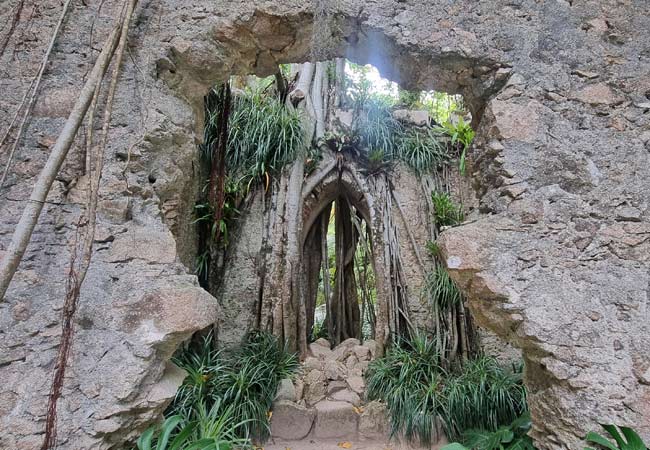
The setting is magical and is often referred to as Portugal’s answer to the Ta Prohm temple (of Angkor Wat in Cambodia).
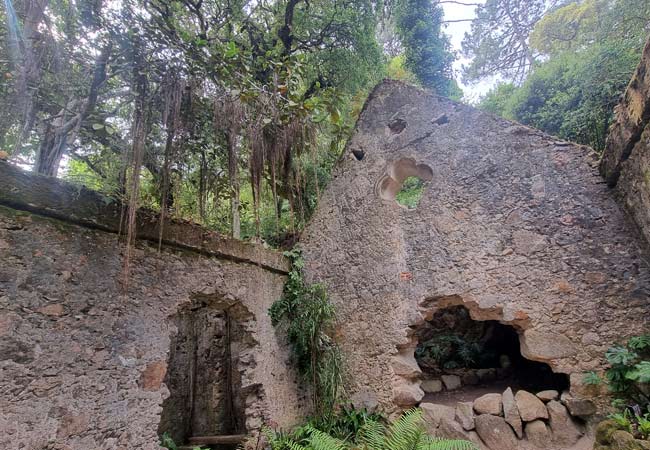
The ruins are actually not that old, being constructed (as ruins) at the same time as the palace in 1863. The majestic trees that grow over the faux ruins are Australian rubber trees, which provide a wonderful photo opportunity.
The Jardim de México is located on the sunniest (and hence driest) section of Montserrat and includes Mexican Taxodium and Bunya Pine trees.
To keep the ground of the Jardim de México suitably dry for growing desert plants, a complex series of water channels and lakes divert any groundwater from this area.
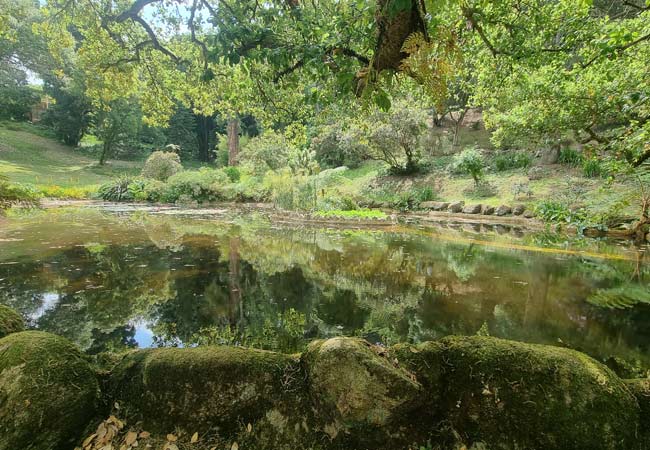
Next, walk around the edge of the Roseiral (rose gardens), which produce sweet, floral aromas that drift across the lawns and up to the palace during the flowering season. The restored rose gardens were officially opened by King Charles III in March 2011.
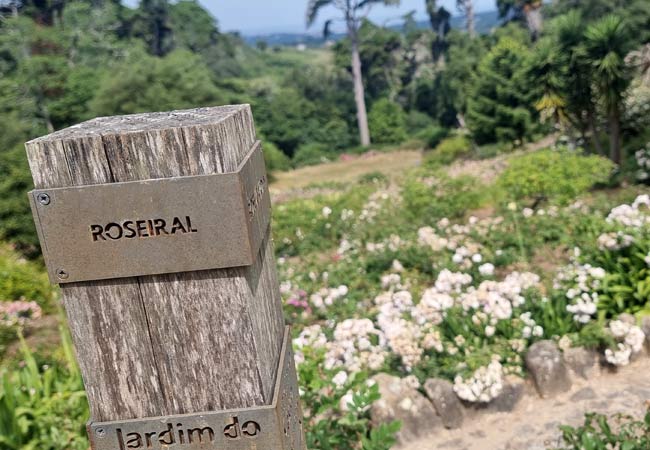
After enjoying the rose gardens, head up the lawn to the Garden Entrance of the palace. This lawn, which could sit proudly in front of any British stately home, was the first to be planted in Portugal. Being in Portugal, it requires a specialist irrigation system and constant maintenance to grow.
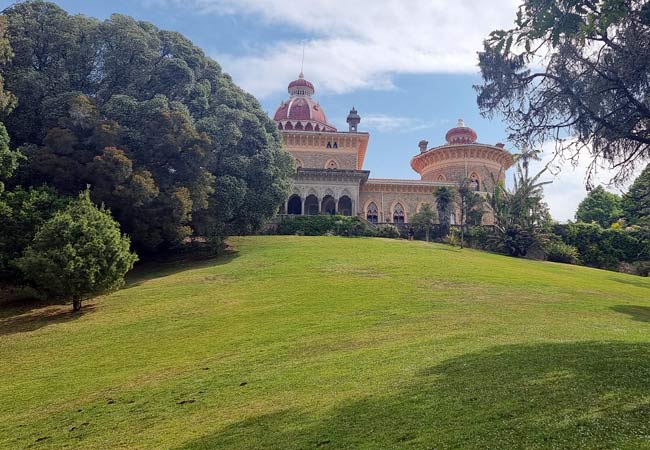
The view from the Garden Terrace overlooking the lawn.
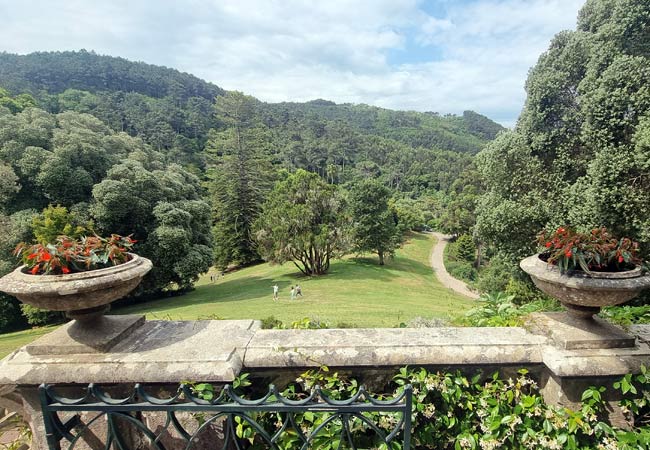
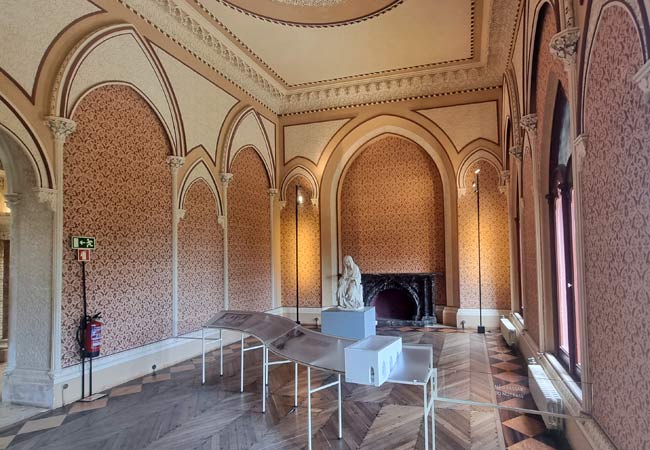
The terrace leads to the Garden Entrance, where guests could access the gardens and their bedrooms without passing through the main house. In the first room is a sweeping staircase to the upper levels, but it is better to first head to the Gallery. This stunningly beautiful room extends the entire length of the palace and connects all of the ground-floor rooms. The beautiful geometric latticework is supported by rose marble columns.
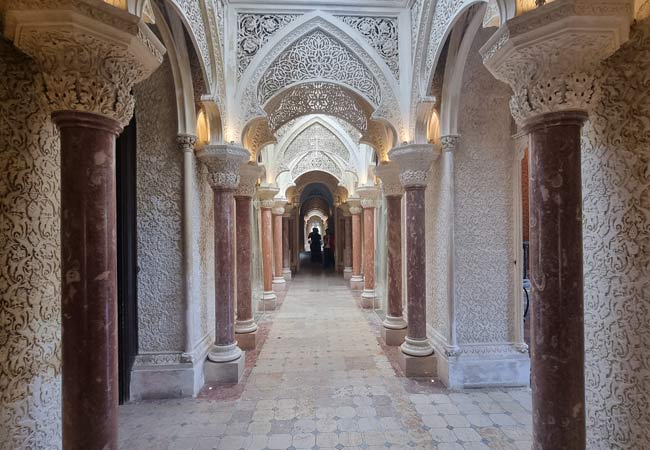
At the centre of the palace, the Gallery opens out into the Átrio Principal, possibly one of the most impressive rooms in glorious Sintra.
The Átrio Principal fuses Arabic and Gothic designs and is topped by an impressive, octagonal-domed roof, inspired by the Batalha Monastery.
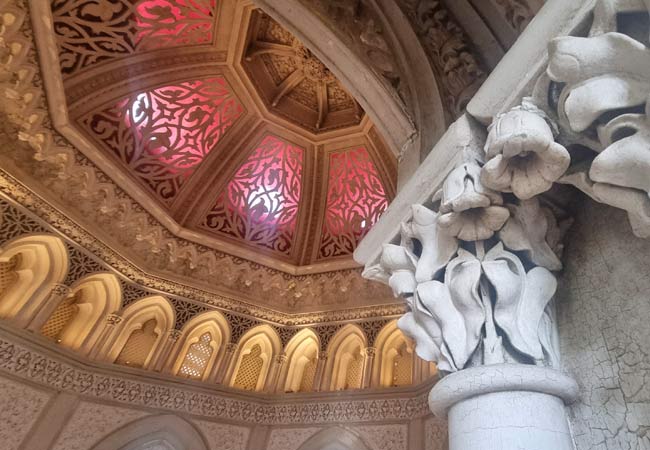
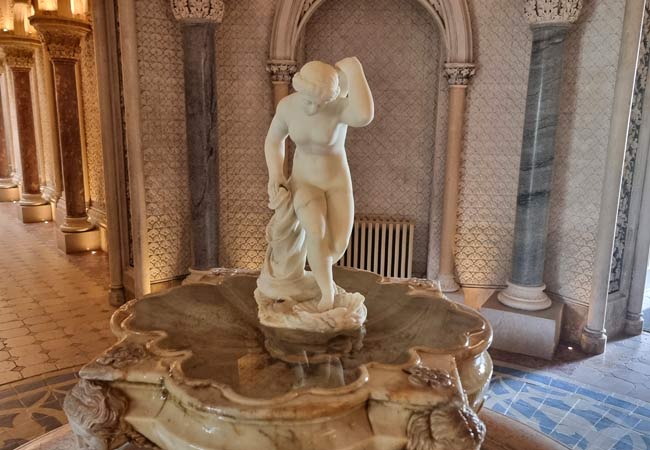
The Palácio de Monserrate was constructed as the summer residence of Francis Cook. The central feature of the Átrio Principal is a fountain, providing the refreshing sounds of running water.
Occupying the entire northern tower is the music room, which was designed to have outstanding acoustics.
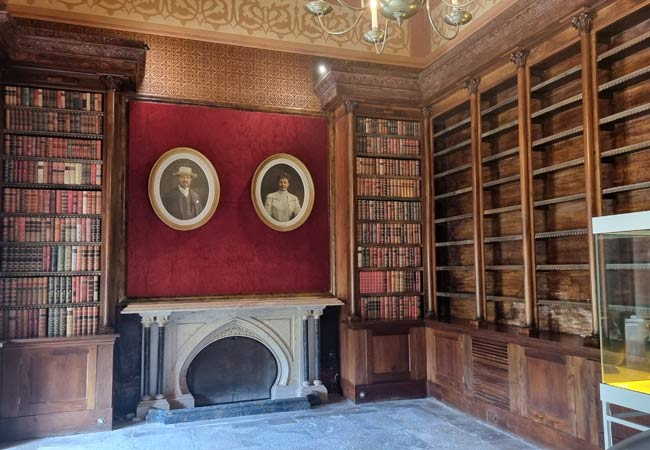
The library has a much darker appearance than the rest of the light and airy palace, being decorated with walnut furniture. This was used as an office by Francis Cook, which could be closed off from the rest of the house by the beautifully carved door – this is the only door along the Gallery hallway.
Opposite the library is the dining room. This room lacks any furniture, as the palace was sadly abandoned for over 50 years and many of the original features were lost.
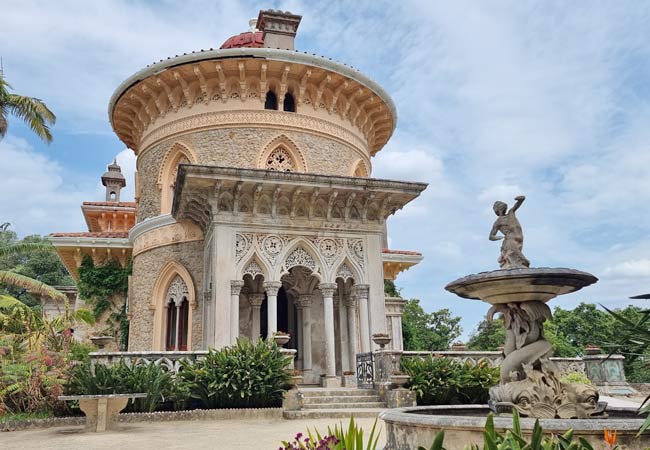
The southern tower was constructed as the entrance room, and one of the best views of the Palácio de Monserrate is from the outside of the entrance.
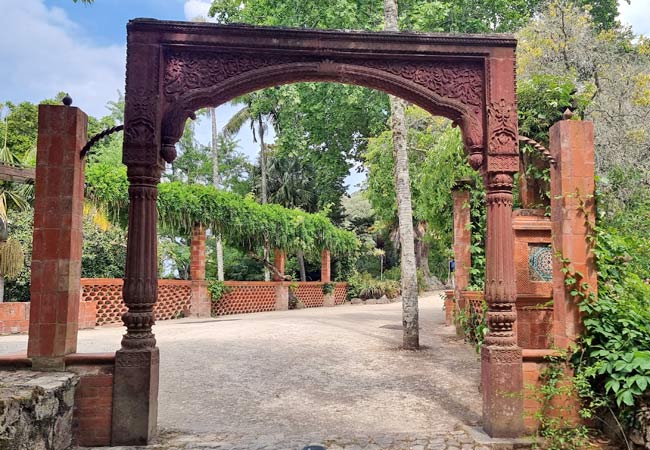
On the walk back to the ticket office, you will pass beneath the Indian arch, brought to Monserrate in 1857 from Delhi.
Just beyond the Indian arch are the café and the distinctive Boulder House, used as the administration building for Parques de Sintra.
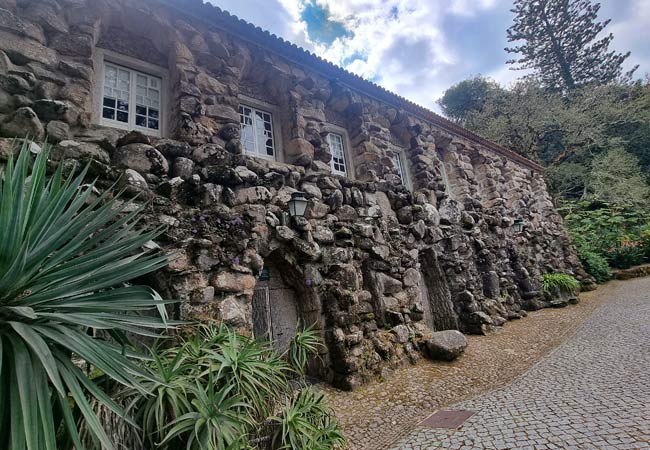
The footpath then climbs a steep hill back to the main entrance.
Discover more of Sintra with our most popular guides


About this guide I'm Philip Giddings. I have been exploring Portugal since 2001, and writing the independent guides at Sintra-Portugal.com since 2008. I live in Lisbon with my Portuguese wife, Carla, who first took me up to Sintra on one of my earliest trips to the country. We have been going back ever since: summer crowds, autumn fog, the quiet Sunday afternoons of January. The region has changed a great deal in twenty-five years of visits, and we have watched it happen.
The site takes no payment from tourist boards, tour operators, or attractions for inclusion. It is funded by affiliate commissions on tour bookings, disclosed on every page that contains them. Every practical detail in these guides (ticket prices, opening hours, bus routes, time-slot policies) is checked against the official Parques de Sintra site, and verified in person on visits two or three times a year. Read my full bio here.